Almost every home in Singapore has had a house gecko dart across a wall or ceiling at some point, and for most people it barely registers. But when the numbers climb — several geckos a night, droppings on window sills, one darting out every time a cupboard opens — it stops being background noise and starts being a real household nuisance. This guide covers why lizards show up in such numbers here, whether they’re actually a health concern, and what genuinely reduces them versus what’s just an old wives’ tale.
What Kind of Lizard Is Actually in Your House?
The lizard found in the vast majority of Singapore homes is the common house gecko — small, pale, translucent-skinned, usually 7 to 15cm including the tail, and almost always seen at night. They’re excellent climbers thanks to specialised toe pads that let them cling to walls and ceilings, which is exactly why they turn up in places other pests can’t reach. Unlike monitor lizards or garden skinks, which stay outdoors, house geckos are genuinely adapted to living inside human dwellings and rarely venture far from a reliable food and light source.
Common house geckos can live several years, are entirely nocturnal (which is why sightings spike after dark and drop to near-zero during the day), and have one well-known survival trait: if grabbed by the tail, the tail detaches and keeps wriggling on its own while the gecko escapes, then slowly regrows over the following weeks. It’s a startling thing to witness the first time, but it’s a normal defence mechanism, not a sign of injury or illness in the animal.
Are All Lizards in Singapore House Geckos?
Not quite, though house geckos are by far the most common indoor species. A few other lizards turn up in and around Singapore homes and gardens, and it’s worth telling them apart since the response is different for each:
- Common house gecko — the small, pale, translucent-skinned gecko covered throughout this guide; genuinely adapted to indoor living
- Flat-tailed house gecko — similar in size and habits to the common house gecko, distinguished mainly by a flattened tail; behaves and is managed the same way
- Garden lizards (bloodsuckers) — larger, more colourful, usually outdoors in gardens and vegetation; rarely enter homes and aren’t drawn to indoor lighting the way geckos are
- Monitor lizards — much larger, found near drains, canals, and green spaces; an occasional outdoor sighting rather than a household pest concern, and not something DIY methods are relevant to at all
If what’s showing up indoors at night near a light fixture is small, pale, and fast-moving, it’s almost certainly a house gecko, and everything in this guide applies directly. A larger or more colourful lizard seen outdoors is a different situation entirely and not something that needs “getting rid of” in the same sense.
Do Geckos Multiply Quickly?
Short answer: House geckos reproduce steadily rather than explosively — a female typically lays a small clutch of eggs (often just one or two) multiple times a year, tucked into cracks, behind picture frames, or in roof void spaces, which is enough for a population to grow noticeably over months if conditions keep favouring them.
This slower, steady reproduction pattern is part of why a gecko population can feel like it’s crept up gradually rather than appeared overnight. Eggs are laid in hidden, hard-to-reach spots specifically because they’re vulnerable, and they can take several weeks to hatch — which also means removing a few adult geckos doesn’t necessarily reflect the full population still developing out of sight.
Why Do I Have So Many Lizards in My House?
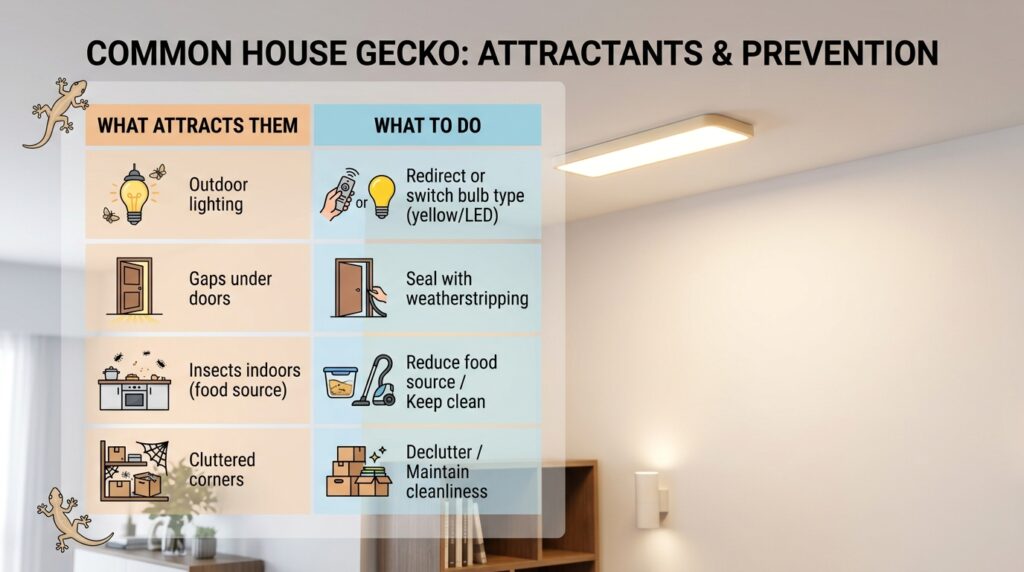
Short answer: House geckos follow their food source — insects — and insects gather around indoor and outdoor lighting at night, so a home with bright exterior lights, gaps around doors and windows, and a steady insect population will naturally attract more geckos than one without.
This is really an indirect pest problem rather than a direct one. Geckos themselves aren’t drawn to your home for shelter or food scraps the way ants or cockroaches are — they’re drawn to the moths, mosquitoes, and other flying insects that gather around your porch light, kitchen exhaust, or living room windows at night. In Singapore’s climate, where insect activity stays high year-round rather than dropping off seasonally, that food source never really goes away, which is a large part of why gecko numbers can feel constant rather than occasional.
Common entry points compound the problem: gaps under doors, unsealed aircon sleeves, small openings around window frames, and gaps where pipes enter the building all give geckos (and the insects they’re chasing) a way in.
Are House Lizards Dangerous?
Short answer: House geckos aren’t venomous and won’t attack people, but like most reptiles they can carry Salmonella bacteria in their droppings, which is a genuine hygiene concern if droppings end up near food preparation surfaces or aren’t cleaned up properly.
This is worth being accurate about rather than either dismissing it entirely or overstating it. Reptile-associated salmonellosis is a well-documented public health topic globally, and geckos are no exception — the risk comes from contact with droppings or contaminated surfaces, not from the gecko itself biting or touching skin. In practice, this means:
- Clean gecko droppings with gloves and proper disinfectant, not bare hands
- Keep food preparation areas covered and wipe down surfaces near where droppings are found
- Wash hands after cleaning up any reptile droppings, as a general hygiene precaution
- There’s no need for alarm over an occasional gecko — the actual risk is about hygiene practice, not proximity
Beyond that hygiene consideration, house geckos are broadly harmless and, ironically, eat a genuinely useful amount of household insects. The nuisance is almost entirely about droppings, noise (their chirping call surprises a lot of first-time hearers), and simply not wanting them around — not a real safety threat.
Is It Actually a Lizard, or Something Else?
Droppings are usually the first sign people notice, and they’re commonly mistaken for other pests, especially cockroach or rodent droppings. Telling them apart correctly matters, because the fix for each is completely different.
| Dropping Type | Appearance | Commonly Confused With |
| House gecko | Small, dark, cylindrical, with a distinct white/chalky uric acid cap at one end | Sometimes mistaken for small rodent droppings |
| Cockroach | Tiny, dark, pepper-like or ridged cylindrical pellets, no white cap | Sometimes mistaken for gecko or mouse droppings |
| Mouse | Larger, dark, pointed at both ends, no white cap | Sometimes mistaken for larger gecko droppings |
The white cap on gecko droppings is the clearest giveaway — it’s uric acid waste, a feature reptiles and birds share but insects and rodents don’t. If what you’re finding doesn’t have that white portion, it’s worth reconsidering whether geckos are actually the source of the problem before investing time in gecko-specific fixes.
Signs You Have a Growing Lizard Problem
- Small, dark, cylindrical droppings on window sills, shelves, or behind furniture
- Multiple sightings per night in the same rooms, rather than an occasional single gecko
- Geckos appearing in areas without obvious insect activity, suggesting they’ve settled rather than just passed through
- Shed skin found in corners or behind furniture
- The gecko’s distinctive chirping/clicking call heard regularly at night
Do Lizards Actually Help by Eating Insects?
Short answer: Yes, genuinely — a house gecko can eat a meaningful number of mosquitoes, moths, and other small insects each night, which is part of why some households deliberately tolerate a small, stable population rather than trying to eliminate every gecko entirely.
This is worth including because a lot of pest content treats every animal in the house as uniformly unwelcome, which isn’t a very useful framing here. Geckos are, in a real sense, a free and mostly self-sustaining form of insect control, and in a country where mosquito-borne illness is a genuine public health concern, that’s not nothing. The distinction that actually matters isn’t “geckos versus no geckos” — it’s a small, stable, unnoticed population versus a growing one leaving droppings in inconvenient places. The steps in this guide are aimed at the second situation, not at eliminating every gecko from a property, which usually isn’t realistic or even worth attempting in a tropical climate like Singapore’s.
What Smell Keeps Lizards Away?
Short answer: Strong smells like coffee grounds, garlic, onion, or pepper spray are commonly suggested as natural gecko deterrents, but the evidence for how well they actually work is mostly anecdotal — they may offer mild, temporary deterrence at best and aren’t a substitute for removing what’s actually attracting geckos in the first place.
It’s worth being honest about this rather than repeating the claim uncritically, because a lot of pest content presents these home remedies as more reliable than they are. If you want to try them, egg shells and coffee grounds placed near entry points, or a garlic-water spray on window sills, are low-cost and low-risk — but don’t expect them to solve a genuine, established gecko problem on their own.
How to Get Rid of Lizards: What Actually Works
| Method | Why It Helps | Realistic Expectation |
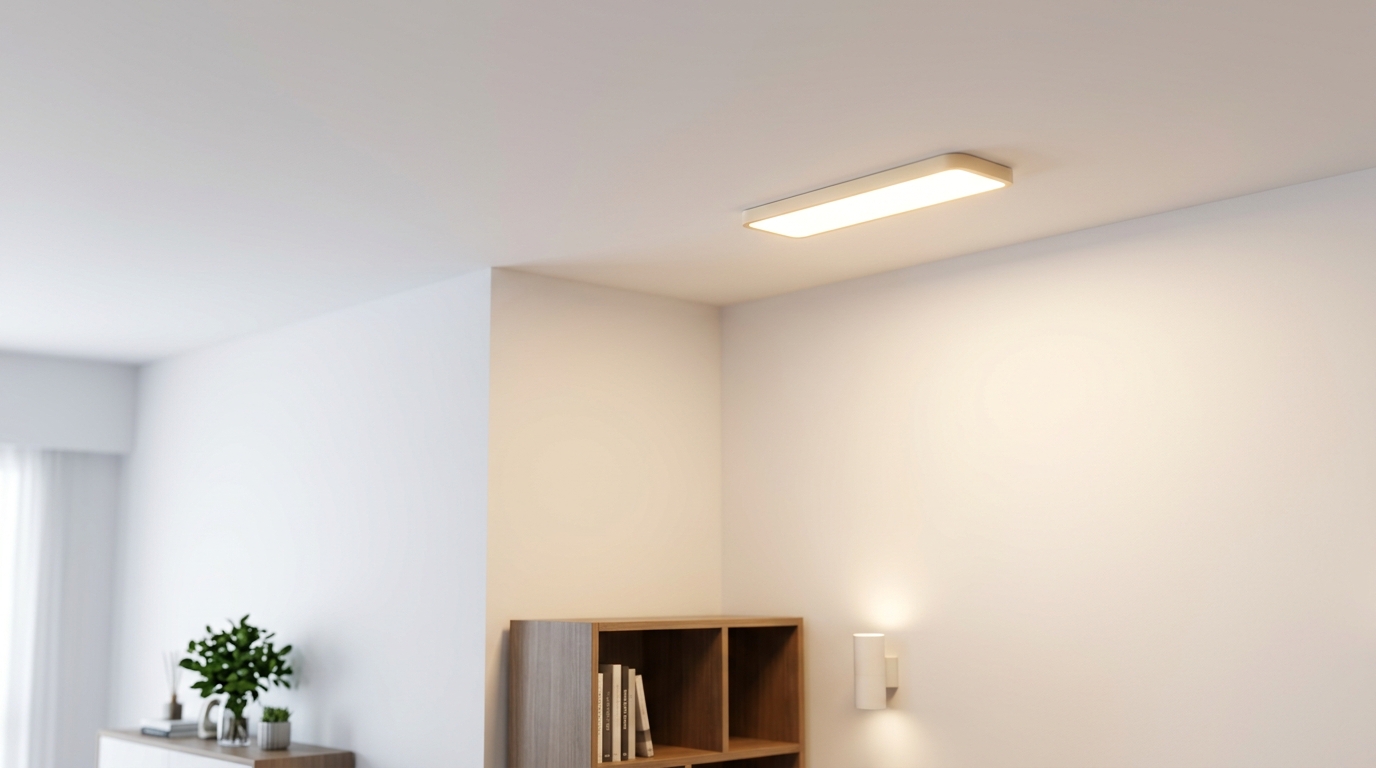
| Reduce outdoor/porch lighting, or switch to yellow “insect-repelling” bulbs | Cuts down the insect swarm that draws geckos in the first place | Addresses the root cause; the single most effective long-term step |
| Seal gaps under doors, around windows, and aircon sleeves | Removes physical entry points | Very effective combined with reducing insect attraction |
| Reduce indoor insect activity (screens, tidy food storage, regular cleaning) | Removes the food source drawing geckos indoors | Works alongside sealing, not instead of it |
| Declutter and clean behind furniture/appliances | Removes hiding spots and makes droppings easier to spot early | Ongoing habit rather than a one-time fix |
| Natural repellents (coffee, garlic, pepper spray) | May offer mild, temporary deterrence | Anecdotal evidence only; not a reliable standalone solution |
| Sticky traps | Can catch individual geckos already inside | Doesn’t address why they’re coming in; best as a short-term measure |
The pattern across all of these is the same one that shows up with a lot of “nuisance” pests: geckos are a downstream effect of insect activity and entry points, not a standalone problem. Fixing the food source and the gaps does more than any spray or scent ever will.
When to Consider Professional Help
Most gecko situations are manageable with the steps above, but it’s worth bringing in a professional when:
- Droppings are appearing near food preparation or storage areas regularly, and hygiene is a real concern
- Numbers keep climbing despite sealing entry points and reducing lighting
- You suspect the underlying issue is a genuinely large indoor insect population (rather than just outdoor lighting), which is worth a proper inspection to identify
- It’s a commercial premises — F&B outlet, warehouse, or office — where hygiene compliance and guest/customer perception matter more than in a private home
Our pest control services for other household pests include a proper inspection to identify what’s actually sustaining the insect population that’s drawing geckos in, which is usually more useful than treating the geckos themselves. For homes dealing with a broader mix of pests alongside the gecko problem, our residential pest control services cover the full picture rather than just one symptom.
A Note on Singapore’s Climate and Housing
Singapore’s warm, humid climate keeps insect populations active all year, unlike temperate climates where gecko sightings drop off seasonally as insects die back in colder months. Combined with high-density HDB living — shared corridors, common lighting, and closely spaced units — geckos can move fairly freely between units and common areas, which is part of why sealing your own unit’s entry points, even if a neighbour’s isn’t sealed, still meaningfully reduces what gets in.
Frequently Asked Questions About Lizards in Singapore Homes
For questions beyond lizards, our full pest control FAQ covers the rest of the site’s most common pest queries.
1. Are house geckos in Singapore poisonous or dangerous to bite?
- House geckos are not venomous and pose no bite risk to humans
- They’re generally shy and avoid contact with people
- The main risk is hygiene-related, through droppings rather than the gecko itself
- Proper cleaning of droppings addresses this risk directly
2. Why do lizards keep appearing near lights at night?
- Insects are drawn to light sources at night
- Geckos follow the insects, not the light itself
- Reducing outdoor lighting or switching to insect-repelling bulbs cuts down both
- This is the single most effective long-term step for reducing gecko numbers
3. What smell keeps lizards away naturally?
- Coffee grounds, garlic, onion, and pepper spray are commonly suggested deterrents
- Evidence for effectiveness is largely anecdotal, not scientifically established
- These may offer mild, temporary deterrence at best
- Removing the actual food source (insects) and entry points is more reliable
4. Is bed bug fumigation the same as heat treatment?
- Geckos can carry Salmonella bacteria, like many reptiles
- Risk comes from contact with droppings, not the gecko itself
- Cleaning droppings with gloves and disinfectant reduces this risk
- Washing hands after cleanup is a sensible general precaution
5. Do lizards mean my house has a bigger pest problem?
- Not necessarily on their own — a few geckos following outdoor insect activity is normal
- Frequent, multiplying sightings can indicate a larger indoor insect population
- Checking for the underlying insect source is more useful than focusing on the geckos
- A professional inspection can identify what’s actually sustaining the activity
6. Do ultrasonic repellent devices work on lizards?
- Evidence for ultrasonic pest repellents working reliably on geckos is limited
- Results reported by users vary widely and aren’t consistently supported by research
- Sealing entry points and reducing insect attraction are more dependable steps
- Any device should be treated as a supplement, not a primary solution
7. How do I stop lizards from getting into my HDB flat specifically?
- Seal gaps under doors, around windows, and aircon sleeves
- Check common corridor lighting and entry points shared with neighbouring units
- Keep food storage areas clean and insect activity low indoors
- Address these even if neighbouring units haven’t, since it still reduces what enters your own unit
8. Should I just leave lizards alone since they eat insects?
- Occasional geckos do provide some natural insect control
- A large or growing population usually signals an underlying insect problem worth addressing
- Droppings and hygiene concerns are valid reasons to manage numbers even if bites aren’t a risk
- Reducing the insect source benefits both the gecko and general pest situation at once