
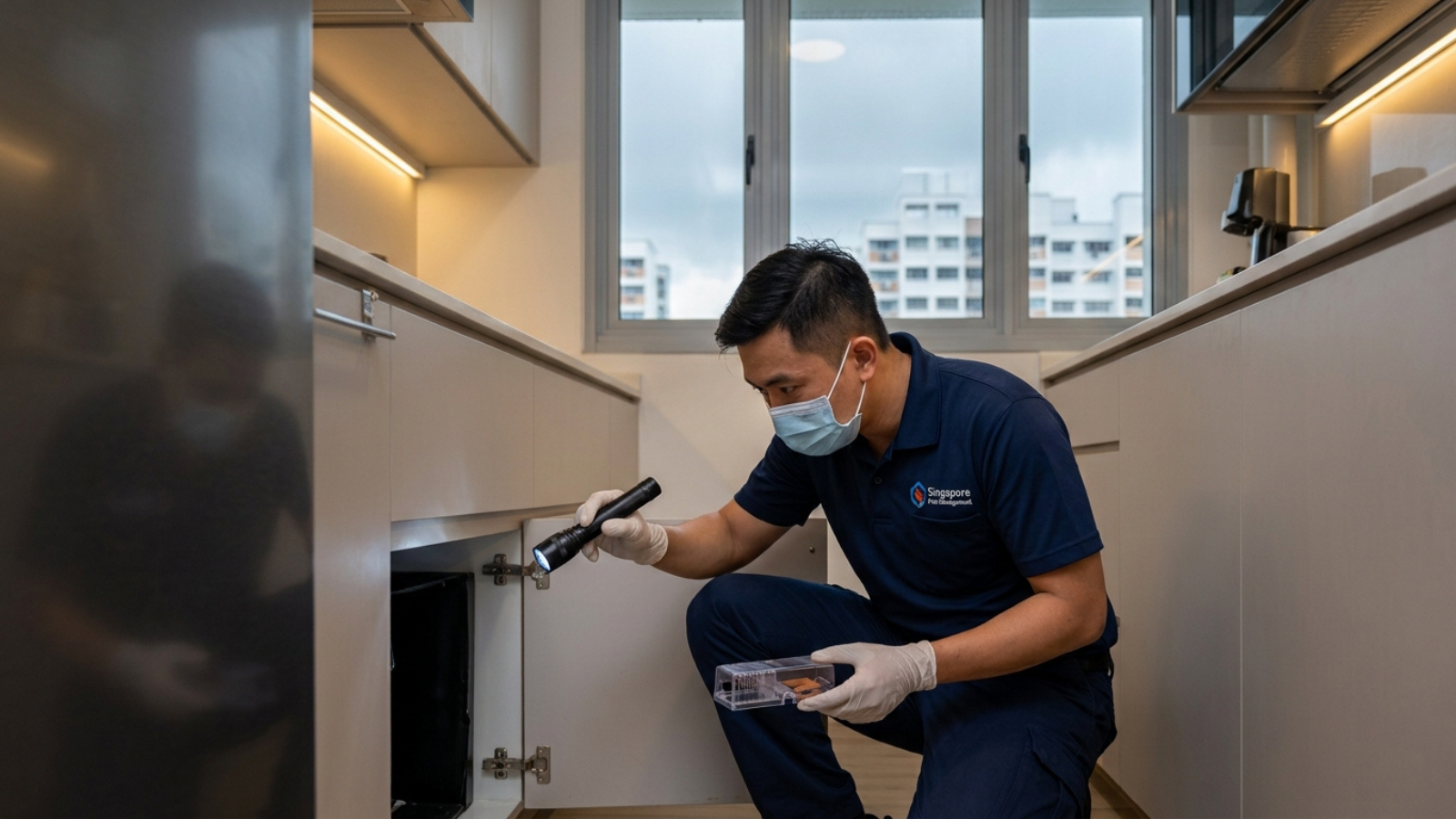
Setting a trap and hoping for the best rarely solves a rat problem. Rats are cautious, adaptable, and quick to avoid anything unfamiliar in their environment, which is why a single snap trap in the kitchen often catches nothing while the population keeps growing behind the scenes.
Getting rid of rats properly means combining the right removal method with sealed entry points and ongoing prevention, not just one or the other. This guide walks through the full process, from confirming what you’re dealing with, to trapping and exclusion, to knowing exactly when it’s time to bring in professional help.
Table of Contents
What Is the Most Effective Way to Get Rid of Rats?
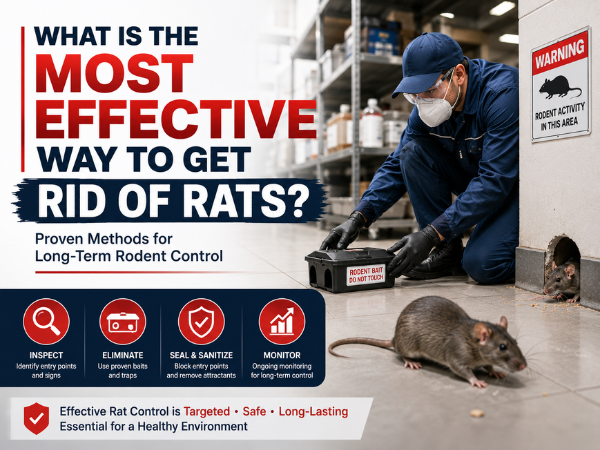
There isn’t a single tool that solves a rat problem on its own. The most effective approach combines three things: removal (trapping or baiting), exclusion (sealing entry points), and sanitation (removing what attracted them in the first place). Skip exclusion, and new rats simply replace the ones removed. Skip sanitation, and the same conditions that caused the original infestation will attract another one.
This is the same principle NEA’s rodent control guidance emphasises: trapping alone treats the symptom, while lasting control requires addressing entry points and food sources together. The steps below follow that same logic in order.
Step 1: Confirm You Actually Have Rats
Before starting any removal method, it’s worth confirming what you’re actually dealing with, and how established the problem is. Look for droppings, gnaw marks, grease trails along walls, and nesting materials in hidden corners. If you’re not sure what you’re looking at, our guide to signs of a rat infestation covers exactly what to check for and where.
This matters because the scale of the problem changes the approach. An isolated sighting with minimal evidence might respond well to a few well-placed traps. Multiple droppings, gnaw marks, and nesting evidence across several areas suggest an established population that needs a more coordinated response, likely combining several of the steps below.
Step 2: Identify Entry Points and Nesting Areas
Rats can squeeze through gaps as small as roughly the width of a coin, so a thorough check needs to go beyond obvious holes. Common entry points and nesting areas include:
- Gaps around pipes, cables, and utility conduits entering the building
- Unsealed vents and air bricks
- Gaps under doors, particularly to gardens, bin areas, or shared corridors
- Roof voids, ceiling spaces, and attic access points
- Cracks in foundation walls, especially in landed properties
- Behind and beneath large kitchen appliances
Take note of where you’re finding the most evidence, droppings, gnaw marks, grease trails, since this usually indicates the main travel route between the nest and a food source. Trap and bait placement in the next step should focus on these areas.
Book a professional inspection to map out entry points and nesting areas that DIY methods alone haven’t been able to fully address.
Step 3: Choose the Right Removal Method
Different methods suit different situations, and using the wrong one for your specific problem is one of the most common reasons DIY rat control fails.
Snap traps
Best for a confirmed, localised problem. Snap traps kill quickly and allow for straightforward disposal. For effective placement:
- Position traps perpendicular to walls, with the trigger end facing the wall, since rats travel along edges rather than through open floor space
- Bait with something firmly attached (peanut butter, dried food tied on) rather than loose food that can be taken without triggering the trap
- Place multiple traps along the identified travel route, rather than relying on just one or two
- Leave traps unset for the first day or two (“pre-baiting”), letting rats feed without triggering, this significantly increases the catch rate once you do set them, since rats are naturally wary of new objects
Glue boards
Glue boards can catch rats but come with real drawbacks: they’re considered less humane by many, since a trapped rat can struggle for an extended period, and they’re less effective against larger rats, which can sometimes escape leaving broken traps and an ongoing problem behind. They’re generally a less preferred option compared to snap traps or professional-grade baiting.
Bait stations (rodenticide)
Tamper-resistant bait stations use rodenticide to reduce larger populations over time. These require careful placement (away from children, pets, and food areas) and consistent monitoring, and are generally best handled by licensed professionals given the safety considerations involved, covered in more detail below.
Do Rat Traps Really Work?
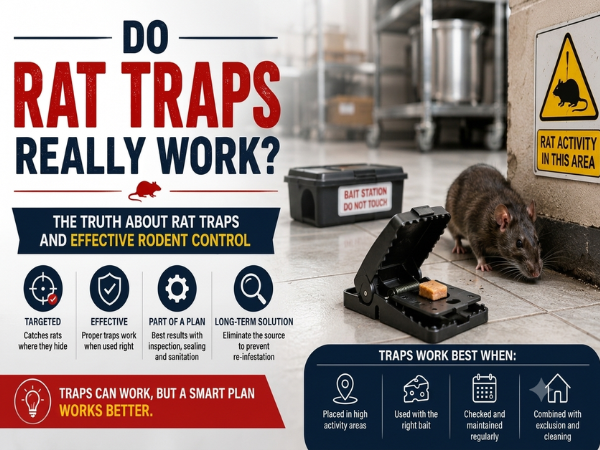
Yes, but effectiveness depends heavily on placement, bait quality, and rat behaviour, not just the trap itself. Common reasons traps fail include:
- Poor placement, traps set in open areas rather than along the walls and routes rats actually travel
- Trap shyness, rats are naturally cautious of new objects, and a trap that immediately triggers or smells like previous captures may be avoided
- Too few traps, a single trap for an established population is unlikely to make a meaningful dent
- Wrong bait, some rats prefer certain foods over generic bait, and pre-baiting (leaving the trap unset with bait) often significantly improves results
Traps genuinely work well for isolated or early-stage problems when used correctly. For an established infestation with multiple rats, traps alone are rarely sufficient without also addressing entry points and food sources.
Step 4: Seal Entry Points
Once you’ve identified entry points in Step 2, seal them using appropriate materials:
- Steel wool or wire mesh, packed tightly into small gaps around pipes and cables, rats can’t chew through steel wool the way they can through plastic or foam sealants
- Sealant or cement, for permanent gaps in walls or foundations
- Door sweeps, for gaps under external doors
- Mesh screens, over vents and air bricks to maintain airflow while blocking entry
Sealing entry points is arguably the single most important long-term step in this whole process. Without it, even a successful trapping effort just creates an opening for the next rat to move in.
Step 5: Clean Up and Sanitise After Removal
Once rats have been removed, clean the affected areas thoroughly:
- Dispose of trapped rats and used traps safely, using gloves and sealing in a bag before disposal
- Clean droppings and urine-affected surfaces with disinfectant, avoid dry-sweeping, which can release airborne particles from droppings
- Remove and dispose of any nesting materials found
- Wash affected surfaces, particularly in kitchens and food storage areas
This step matters for health reasons as much as hygiene, rat droppings and urine can carry bacteria linked to illnesses like leptospirosis, so proper cleanup protects your household beyond just removing the visible mess.
Step 6: Monitor and Prevent Reinfestation
After removal and sealing, ongoing prevention keeps the problem from returning:
- Store food, including pet food, in sealed, rodent-proof containers
- Take out rubbish regularly and keep bin areas covered and clean
- How to get rid of rats continue checking previously sealed entry points periodically, materials can degrade or new gaps can appear
- Trim vegetation and clear clutter near the building’s exterior, particularly for landed properties
- Keep an eye out for renewed signs, droppings, gnaw marks, over the following weeks
Rodenticide Safety: What Homeowners Need to Know
If you’re considering rodenticide as part of a DIY approach, safety needs to come first:
- Use only tamper-resistant bait stations, never loose bait, particularly in homes with children or pets
- Place stations away from food preparation areas and out of reach of children
- Follow label instructions exactly, using more than directed doesn’t improve effectiveness and increases risk
- Be aware that a rat that consumes rodenticide may die in an inaccessible location, which can create an odour problem days later, one of the practical downsides of DIY baiting compared to professional programmes that account for this
How to get rid of rats given these considerations, many homeowners find that professional-grade baiting, placed and monitored by a licensed technician, is a safer and more effective option than DIY rodenticide use, particularly in households with children or pets.
When DIY Isn’t Enough
DIY methods genuinely help with isolated or early-stage rat activity. It’s reasonable to consider professional help when:
- You’ve set traps consistently for one to two weeks with no results, suggesting either poor placement or an established population avoiding them
- You’re finding evidence (droppings, gnaw marks) in multiple areas of the property, suggesting more than one or two rats
- you’ve sealed visible entry points but activity continues, suggesting an entry point you haven’t identified
- The infestation involves shared building elements (roof voids, risers) in an HDB or condo, which often can’t be fully addressed at the individual unit level
- You’re not comfortable using rodenticide safely given children or pets in the home
These are exactly the kinds of situations residential pest control services are built to handle.
Book a professional inspection to map out entry points and nesting areas that DIY methods alone haven’t been able to fully address.
How Do Professionals Remove Rats From a Home?
Professional rat removal follows a more systematic process than DIY trapping, and typically includes steps a home approach can’t easily replicate:
- Full-property inspection. Technicians assess the entire property, not just the areas with visible activity, to map the extent of the infestation and identify all likely entry points, including less obvious ones like roof voids and shared risers.
- Species and severity assessment. How to get rid of rats identifying whether it’s sewer rats, roof rats, or house mice, and how established the population is, shapes the entire treatment plan.
- Combination treatment. Professionals typically combine snap traps, glue boards, and tamper-resistant bait stations with professional-grade rodenticide, placed strategically based on the inspection findings rather than guesswork.
- Professional-grade exclusion. Sealing entry points using materials and techniques suited to the specific gaps found, sometimes including areas a homeowner wouldn’t think to check or couldn’t safely access.
- Follow-up monitoring. Scheduled follow-up visits confirm activity has genuinely stopped, adjust bait station placement if needed, and catch any new entry points before they become a fresh problem.
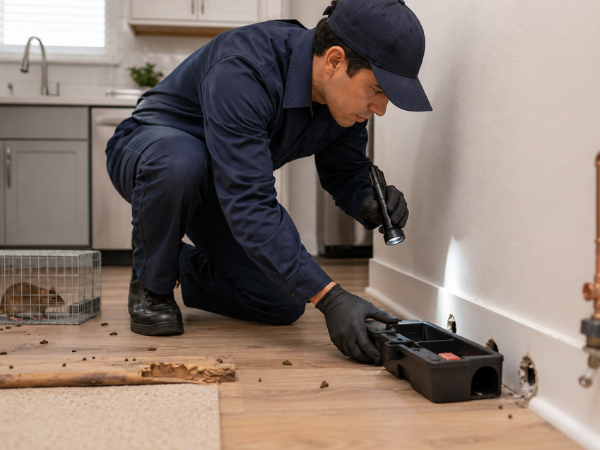
At Pest Free Management, this structured, inspection-led approach, part of our rodent control solutions, is what typically resolves infestations that DIY methods alone couldn’t fully clear, particularly cases involving multiple entry points or shared building risk in HDB and condo settings.
Speak with our pest specialists if you’ve tried DIY methods without success, early professional intervention is usually faster and less disruptive than continuing to troubleshoot alone.
Rat Removal by Property Type
HDB and condo units
Shared risers, bin chutes, and refuse points mean rat problems in high-rise living often originate outside your specific unit. Sealing your own entry points helps, but persistent activity despite sealing may point to a building-wide issue worth raising with your management corporation or town council alongside your own treatment.
Landed properties
Direct soil contact, gardens, and outdoor structures (sheds, decking) give rats more potential nesting sites than a typical condo unit. Exterior exclusion and garden maintenance play a bigger role here than in high-rise settings.
Rental properties
If you’re renting, check your tenancy agreement for pest control responsibilities before starting DIY treatment or booking professional service, this is sometimes the landlord’s responsibility, particularly for pre-existing or structural entry point issues.
Request a free consultation or schedule a rodent inspection today with Pest Free Management if DIY methods haven’t fully resolved your rat problem.
Key Takeaways
- Effective rat removal combines trapping, sealing entry points, and removing food sources, not just one method alone.
- Snap traps work well for isolated activity when placed correctly (along walls, pre-baited); glue boards and DIY rodenticide come with more drawbacks and safety considerations.
- sealing entry points is arguably the most important long-term step, without it, new rats simply replace the ones removed.
- Rodenticide requires careful, tamper-resistant placement, and many homeowners find professional-grade baiting safer, particularly with children or pets at home.
- DIY methods struggling after one to two weeks, or evidence spread across multiple areas, are reasonable signals to bring in professional help.
- professional removal typically combines full-property inspection, species-specific treatment, and professional-grade exclusion, addressing what DIY methods often can’t reach.
Frequently Asked Questions About Rodents
1. What is the most effective way to get rid of rats?
How to get rid of rats the most effective approach combines removal (trapping or baiting), sealing entry points, and removing food sources, all three together, not any single method alone. Trapping without sealing entry points tends to see the problem return as new rats move in.
2. Do rat traps really work?
Yes, when placed correctly along walls and known travel routes, with proper bait and ideally a pre-baiting period. Traps are most effective for isolated or early-stage activity; an established infestation across multiple areas usually needs a more comprehensive approach.
3. How do professionals remove rats from a home?
Professional removal typically starts with a full-property inspection to identify entry points and nesting areas, followed by a combination of trapping, professional-grade baiting, and exclusion sealing, with follow-up visits to confirm the infestation is fully resolved.
4. How long does it take to get rid of rats?
It depends on the severity. An isolated issue addressed promptly with traps and sealing might resolve within one to two weeks. An established infestation, particularly one involving shared building risk, often takes longer and benefits from professional treatment and follow-up monitoring.
5. Is it safe to use rat poison at home?
It can be, if used correctly in tamper-resistant bait stations placed away from children and pets, following label instructions exactly. Given the safety considerations involved, many homeowners prefer professional-grade baiting placed and monitored by a licensed technician.
6. How much does professional rat removal cost in Singapore?
It depends on the extent of the infestation, property size, and whether you need a one-off treatment or ongoing monitoring given shared building risk. Our pest control pricing guide breaks down what drives the cost by pest type, a site assessment is the only way to get an accurate figure for your specific situation.
7. If I have rats, should I also check for cockroaches?
It’s worth a look. Rats and cockroaches are drawn to the same underlying conditions, accessible food, moisture, and cluttered hiding spots, so properties dealing with one often have some risk of the other, particularly in kitchens and refuse areas. Our guide to 9 warning signs of a cockroach infestation covers what to look for if you want to rule it out.
Explore Expert Pest Control Guides

Request a free consultation or schedule a rodent inspection today with Pest Free Management if DIY methods haven’t fully resolved your rat problem