
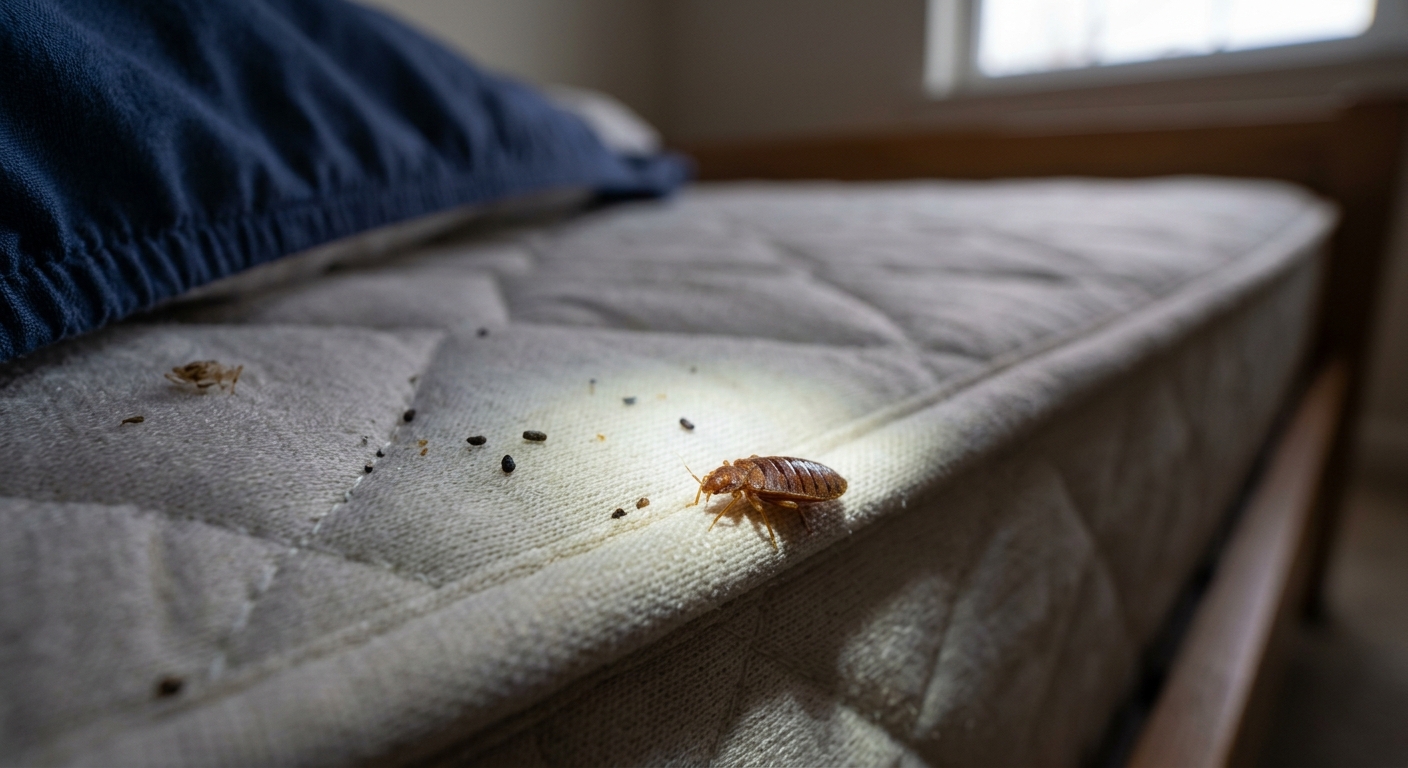
Getting one bite-free night after a bed bug treatment doesn’t mean the problem is solved — it’s usually the reason people think it’s solved when it isn’t. Bed bugs survive a single treatment more often than almost any other household pest, and understanding why is the difference between an infestation that ends in a few weeks and one that drags on for months.
If you’re still trying to confirm whether you actually have bed bugs, our inspection checklist walks through where to look and what to look for, and our guide to identifying and treating bed bug bites covers what the bites themselves look like. This guide picks up from there — you know you have them, and now you need them gone.
Table of Contents
Why Bed Bugs Are Harder to Eliminate Than Cockroaches or Ants
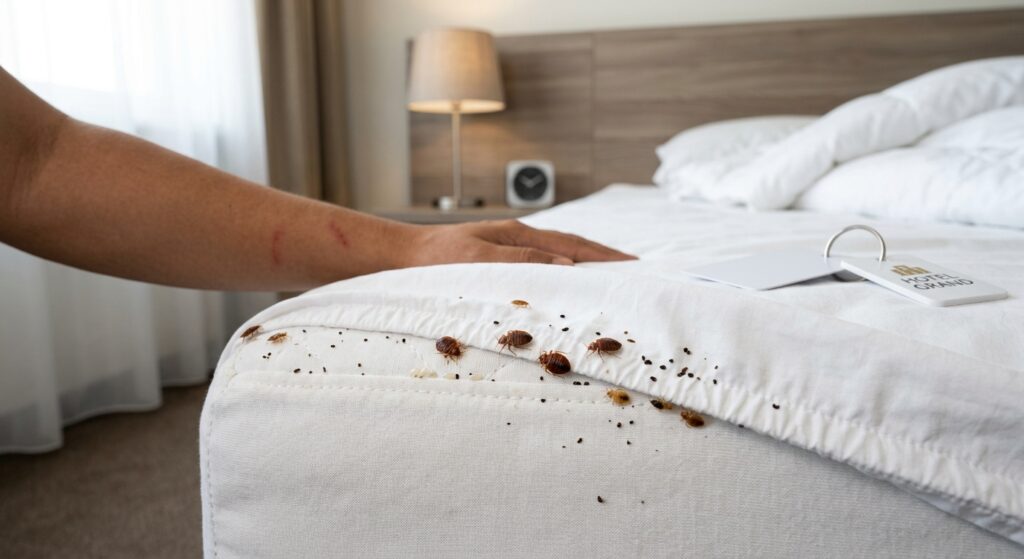
Most household pests die reasonably well from a can of spray because they’re either out in the open (ants on a trail) or feeding directly on bait (cockroaches). Bed bugs do neither. They spend most of their life cycle wedged into seams, joints, and gaps no wider than a credit card — mattress piping, bed frame joints, skirting boards, behind wallpaper, inside electrical sockets — and they only come out to feed while you’re asleep.
That hiding behaviour means a contact spray only kills what it directly touches. Anything sheltering a few millimetres deeper survives untouched. Add to that a well-documented pattern of resistance to some older pyrethroid insecticides in bed bug populations worldwide, and it’s clear why “I sprayed the whole room” so often isn’t enough on its own.
Eggs make this worse. A single female can lay several eggs a day, they’re glued into cracks with a cement-like substance, and — as covered below — they tolerate both heat and chemicals far better than adult bed bugs do. Missing even a small cluster of eggs is enough to repopulate a room within weeks.
Can You Get Rid of Bed Bugs Yourself?
Short answer: DIY methods can reduce a small, early-stage bed bug problem and are worth doing alongside any treatment, but they rarely eliminate an established infestation on their own because they can’t reliably reach every hiding spot or kill every egg.
That doesn’t mean DIY effort is wasted — it genuinely helps, especially done in support of a professional treatment rather than instead of one:
- Wash and dry on high heat. Bedding, curtains, and any washable fabric that’s been in contact with the affected area — the dryer’s heat is what does the work, not the wash cycle.
- Vacuum thoroughly. Mattress seams, bed frame joints, skirting boards, and carpet edges. Empty the canister or bag into a sealed bag immediately and dispose of it outside the home.
- Encase the mattress and box spring. A certified bed bug encasement traps anything left inside and starves it out over time, and stops new ones from getting in.
- Declutter around the bed. Fewer hiding spots means fewer places a treatment (or an inspection) can miss.
- Seal obvious cracks in skirting boards, bed frames, and wall-mounted fixtures near the bed.
What consistently makes things worse: reaching for an over-the-counter fogger or “bug bomb.” These release insecticide into open air, which bed bugs — sheltering deep in cracks — are rarely exposed to directly. Worse, the disturbance can scatter them into neighbouring rooms or, in HDB flats and condos, toward a shared wall into an adjoining unit, turning a one-room problem into a multi-unit one.
What Temperature Kills Bed Bugs?
Short answer: Adult bed bugs die within minutes at sustained temperatures above roughly 48°C (118°F), but their eggs are far more heat-tolerant and need longer exposure — which is why professional heat treatments hold a room at temperature for hours, not minutes.
This is the detail that trips up a lot of DIY attempts with hair dryers or steamers used briefly on a mattress: a quick pass of heat on the surface doesn’t sustain the temperature long enough, deep enough, to reach bugs sheltering inside a seam or a bed frame joint. Professional whole-room heat treatments use industrial heaters and fans to bring the entire room — including voids behind baseboards and inside furniture — up to a lethal temperature and hold it there long enough for the heat to penetrate, which is a very different thing from warming the air in the middle of the room.
Professional Bed Bug Treatment Methods
There isn’t one single “correct” treatment — the right approach depends on the extent of the infestation, the type of property, and what’s practical for the household. Our bed bug treatment services explain which method (or combination) suits your situation and why, rather than defaulting to one option.
| Method | How It Works | Best Suited For |
| Heat treatment | Whole-room heating to a sustained lethal temperature, penetrating cracks and voids | Severe or widespread infestations; when a fast, chemical-light result is preferred |
| Steam treatment | Targeted high-temperature steam applied directly to mattress seams, joints, and cracks | Spot-treating specific furniture items alongside a broader treatment plan |
| Residual insecticide treatment | NEA-registered residual product applied to cracks, crevices, and harbourage points, left to keep working after application | Ongoing protection between visits; treating areas heat can’t easily reach |
| Encasements | Certified mattress and box spring covers that trap and starve any survivors | Every treatment plan, as a supporting measure rather than a standalone fix |
Whichever methods are used, they should be applied by a registered Vector Control Operator (VCO) with technicians certified under Singapore’s Control of Vectors and Pesticides Act — this licensing framework exists precisely because pesticide selection and application need to be handled correctly, not because bed bugs have their own separate NEA code (they don’t; the same vector control licensing standards that apply to other pests apply here).
How Many Treatments Does It Take to Get Rid of Bed Bugs?
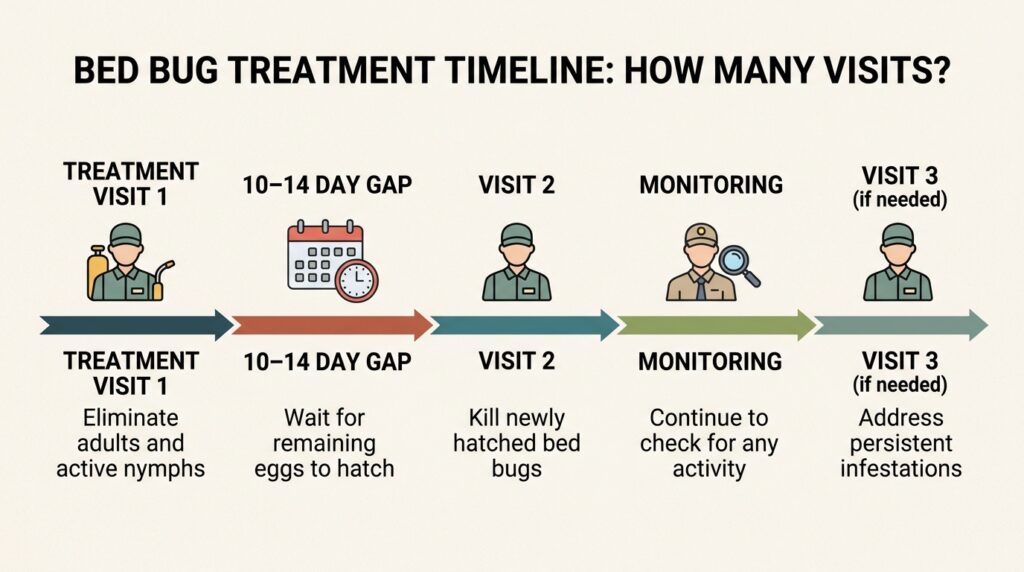
Short answer: Most established infestations need two to three treatment visits spaced roughly one to two weeks apart, because eggs that survive the first visit will hatch before the next one — a single visit is rarely enough.
This is the single biggest expectation gap in DIY attempts and even in some rushed professional jobs. Bed bug eggs are more resistant to both heat and chemical treatment than adults, so a treatment that kills every visible bug can still leave viable eggs behind. The follow-up visit (or visits) exists specifically to catch anything that has hatched since — which is also why a provider offering only a single one-off spray for a confirmed infestation is worth questioning.
What to Expect on Treatment Day
A bit of preparation makes each visit more effective and shortens the overall timeline:
- Strip and wash bedding on high heat before the technician arrives.
- Clear the floor and surfaces near the bed so every crack and joint is accessible.
- Vacuum thoroughly beforehand, disposing of the bag outside.
- Don’t move items from the affected room into unaffected rooms — this is one of the most common ways an infestation spreads within a home.
- Follow the post-treatment instructions the technician gives you, including how long to stay out of the room if it’s a heat treatment, and when it’s safe to bring bedding back in.
Preventing Bed Bugs From Coming Back
Once a treatment plan is complete, a few habits make a recurrence far less likely:
- Keep the mattress and box spring encasements on — they continue protecting against reintroduction long after treatment ends.
- Inspect luggage and secondhand furniture before bringing them into the home; returning travellers and pre-loved furniture are two of the most common ways bed bugs get reintroduced into Singapore households.
- If you live in an HDB flat or condo, be aware that infestations can move between adjoining units through shared walls or corridors — flag any signs early to your town council or MCST rather than waiting.
- Keep up with the full monitoring schedule your provider recommends, even after bites stop — the absence of bites doesn’t confirm the absence of bed bugs.
When to Call a Professional
DIY measures are worth doing in any case, but it’s time to bring in a licensed provider when:
- Bites keep appearing after a week or more of DIY effort.
- You’ve confirmed bed bugs in more than one room, or in shared/rental accommodation.
- The infestation is in a commercial setting — hotel, serviced apartment, or dormitory — where the reputational and guest-experience stakes are higher.
- You’re not confident every hiding spot has been reached, which, given how bed bugs hide, is most of the time.
If bed bugs are turning up alongside other pest issues in the same property, our residential pest control services cover the full picture rather than just one problem at a time.
Frequently Asked Questions About Bed Bug Treatment in Singapore
For questions beyond bed bugs, our full pest control FAQ covers the rest of the site’s most common pest queries.
1. Can I get rid of bed bugs myself without professional help?
- DIY steps like laundering, vacuuming, and encasements can reduce a small or early-stage problem
- They rarely reach every hiding spot in an established infestation
- Bed bug eggs are more resistant to DIY methods than adults are
- Foggers and bug bombs can scatter bed bugs into other rooms or units rather than killing them
- Most confirmed infestations need professional, multi-visit treatment to fully resolve
2. How many treatments does it take to get rid of bed bugs?
- Most cases need two to three visits spaced one to two weeks apart
- The gap allows any surviving eggs to hatch before the next treatment
- Severity, property size, and treatment method all affect the exact number
- A single one-off treatment is rarely enough for an established infestation
- Follow-up monitoring after the final visit confirms the infestation is fully cleared
3. What temperature kills bed bugs?
- Adult bed bugs die within minutes above roughly 48°C (118°F)
- Eggs are more heat-resistant and need longer, sustained exposure
- Professional heat treatments hold an entire room at temperature for hours, not minutes
- Heat needs to penetrate cracks, voids, and furniture, not just warm the air
- Brief heat exposure from a hair dryer or handheld steamer is not enough on its own
4. Is bed bug fumigation the same as heat treatment?
- Fumigation typically refers to chemical or gas-based treatment, not heat
- Heat treatment uses sustained high temperature instead of chemical agents
- Some providers combine both approaches depending on the infestation
- The right method depends on the extent of infestation and the property type
- A provider should explain which method suits your situation, not default to one
5. Can bed bugs come back after treatment?
- Yes, especially if encasements are removed too soon or luggage/furniture isn’t checked
- Returning travellers and secondhand furniture are common reintroduction sources
- Infestations can spread between adjoining units in HDB flats and condos
- Keeping encasements on and completing the full monitoring schedule reduces the risk
- Early signs after treatment should be reported, not left to see if they resolve alone
6. Do I need to throw away my mattress if I have bed bugs?
- Not usually — a certified encasement combined with proper treatment can save a mattress
- Replacement is sometimes recommended only for severely damaged or heavily infested items
- A professional can advise whether your specific mattress needs replacing
- Encasing is generally more practical and cost-effective than replacing
7. How do I know if bed bug treatment actually worked?
- No new bites over a full monitoring period, not just a few days
- No fresh droppings, shed skins, or live bugs found during follow-up inspections
- Interceptor traps under bed legs showing no activity over time
- Your pest control provider should confirm clearance with a follow-up inspection, not just the last treatment visit
8. Should I move to another room during bed bug treatment?
- For heat treatment, you’ll typically need to leave the room for a set period while it’s heated and cooling
- For chemical treatment, follow the re-entry time your technician specifies
- Avoid moving bedding, clothing, or furniture from the treated room into other rooms during this period
- Your provider will give you exact timing based on the method used
Pest Management Resources

Pest Free provides professional bed bug treatment across Singapore homes and businesses, with a multi-visit approach designed around how bed bugs actually survive a single treatment. Book an inspection to get a treatment plan suited to your property