

A dark smear along a skirting board. A faint scratching sound in the ceiling at night. A gnawed corner on a food packet you’re sure was intact yesterday. None of these feel like proof on their own, but together, they’re usually enough to answer the question most people are really asking: is this one rat, or a full infestation?
Rats are cautious, nocturnal, and good at staying out of sight, which means most infestations are confirmed through the evidence they leave behind rather than a direct sighting. This guide walks through the clearest signs of a rat infestation, where to check for them, why Singapore properties are particularly susceptible, and what to do once you’ve confirmed it’s more than a one-off visitor.
Table of Contents
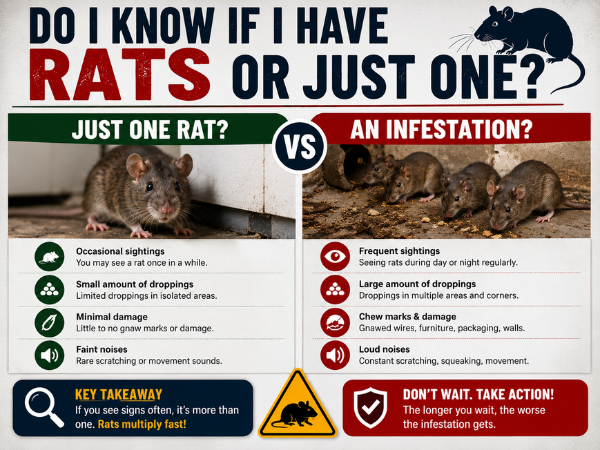
How Do I Know If I Have Rats or Just One?
Rats rarely travel alone. If you’ve spotted one, it’s reasonable to assume there are more nearby, either because rats tend to nest in groups near a reliable food and water source, or because a single sighting often means the population has already grown large enough that individuals are being pushed to forage more visibly.
That said, one sighting alone, particularly outdoors or in a shared corridor, doesn’t automatically mean your specific unit is infested. What matters more is whether you’re also finding physical evidence indoors: droppings, gnaw marks, or nesting materials. A sighting plus any of these is a much stronger signal than a sighting on its own.
First Signs of a Rat Infestation
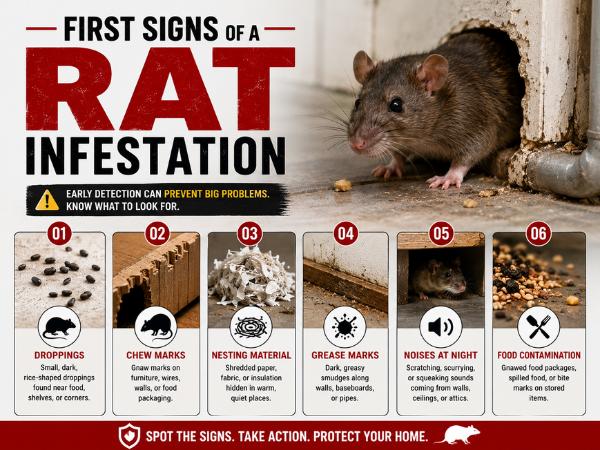
The earliest indicators of a rat problem are usually physical evidence rather than a direct sighting, since rats do most of their activity at night while a property is quiet. Watch for:
- Droppings near food storage, along skirting boards, or inside cabinets and drawers
- Gnaw marks on food packaging, cardboard, wiring, or wooden fixtures
- Grease or smudge marks along walls and skirting, left behind as rats repeatedly travel the same routes, their fur carries dirt and oil that rubs off along frequently used paths
- Scratching or scurrying sounds, particularly at night, in ceilings, wall cavities, or under flooring
- A stale, ammonia-like odour, from urine and droppings accumulating in nesting areas
- Nesting materials, shredded paper, fabric, or insulation gathered into a soft nest, usually tucked into a hidden, undisturbed corner
- Damaged food packaging, particularly dry goods like rice, cereal, or pet food, chewed open to access the contents inside
Two or more of these together are a reasonable trigger to stop monitoring and start addressing the problem directly.
Do Rats Come Out During the Day?
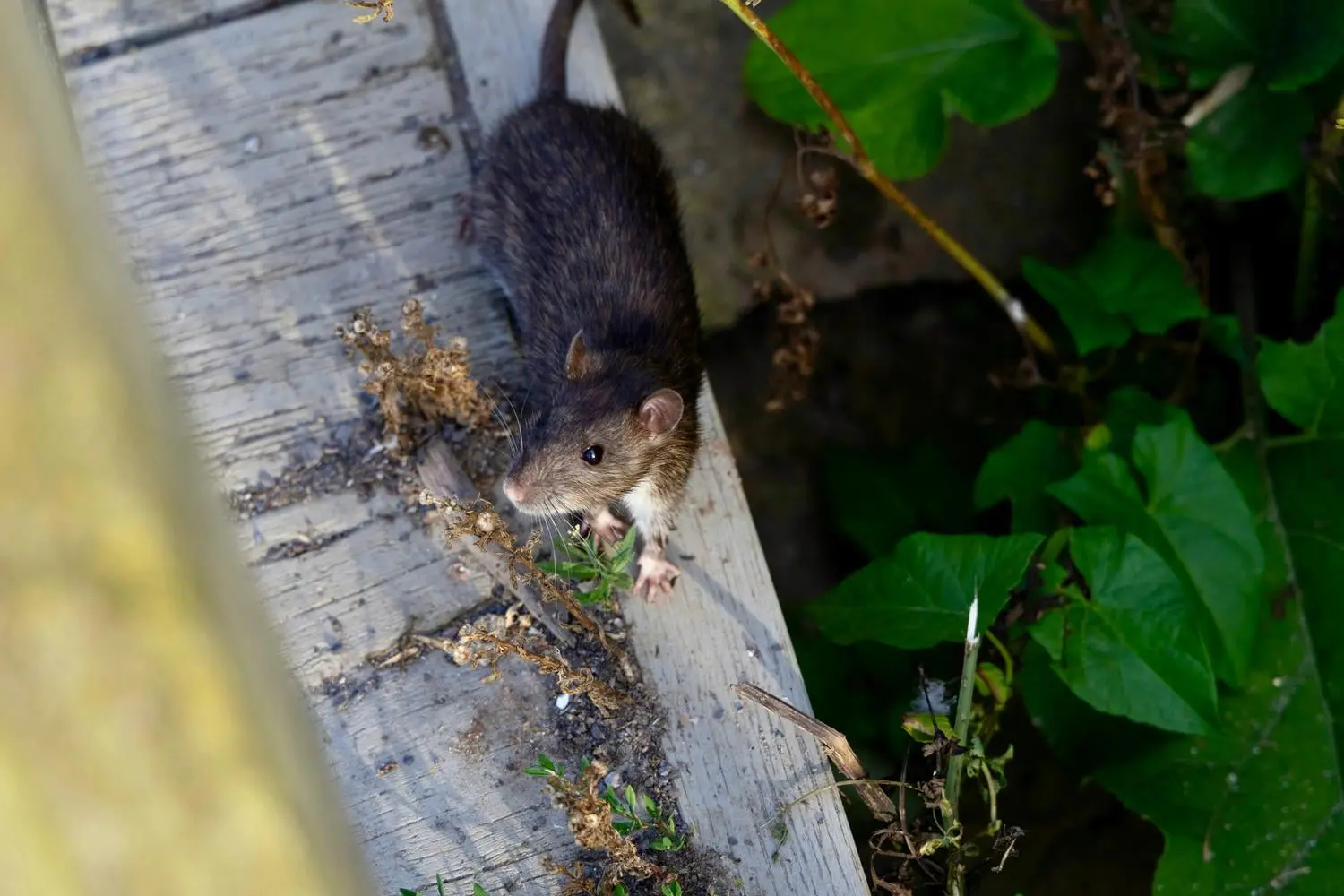
Rats are primarily nocturnal, most active from dusk through the early hours, which is part of why direct sightings are relatively rare compared to the physical evidence they leave behind. That said, daytime activity isn’t unheard of, and it’s often a meaningful sign in its own right.
Seeing a rat during the day can indicate overcrowding, where a growing population has outpaced the available food or shelter and individuals are being forced to forage outside their usual hours. It can also happen when a nesting site has been disturbed, by renovation work, cleaning, or pest control activity nearby, pushing rats to relocate or search for food earlier than usual. Either way, a daytime sighting is generally worth treating as a stronger signal than an isolated nighttime one.
Rat Droppings: What They Look Like and Where to Find Them
Rat droppings are one of the most reliable indicators of an active infestation, and they’re relatively distinctive once you know what to look for. Fresh droppings are dark, moist, and shiny, Rat infestation signs roughly the size and shape of a grain of rice, though larger than mouse droppings. Older droppings dry out, becoming duller and greyish over time, which can actually help estimate how recently the area has been active.
Check these spots first:
- Along skirting boards and in cabinet corners, especially in kitchens and pantries
- Inside drawers or cupboards where food or packaging is stored
- Near bin areas, both indoors and in shared refuse points
- Behind appliances like refrigerators, ovens, and washing machines
- In roof voids, ceiling spaces, or storerooms, if accessible
Finding a cluster of droppings in one area, rather than a single isolated one, is a stronger sign that the spot is being used regularly, likely along a travel route between a nest and a food source.
Other Physical Evidence to Check For
Beyond droppings, a few additional signs help confirm the extent of an infestation:
- Gnaw marks on structural elements. Rats’ teeth grow continuously, so they gnaw to keep them worn down, this can mean damage to wiring, pipes, wooden fixtures, and even structural materials, sometimes leading to electrical or water damage.
- Grease trails. Repeated use of the same route leaves a subtle, greasy smear along walls and skirting boards, especially visible in areas with pale-coloured surfaces.
- Footprints and tail marks. In dusty areas, such as roof voids or storerooms, rats can leave visible tracks.
- Burrows. Outdoors, particularly near garden beds, compost areas, or building foundations, small burrow holes can indicate a nesting site nearby.
Speak with our pest specialists for tailored advice on your property, whether it’s an HDB kitchen, a landed home garden, or a commercial storeroom.
Common Types of Rats and Mice in Singapore
Singapore Properties are most commonly affected by three types of rodents, and knowing which one you’re dealing with helps target the right control approach.
| Type | Also Known As | Typical Location | Behaviour |
| Sewer rat | Norway rat, brown rat | Drains, sewers, ground-level areas | Burrows underground, strong swimmers, larger body size |
| Roof rat | Black rat | Ceilings, attics, high shelving, trees | Excellent climber, prefers elevated nesting spots |
| House mouse | — | Wall voids, kitchen cabinets, storage areas | Much smaller, needs only a small gap to enter, breeds quickly |
Sewer rats tend to be associated with drains, bin centres, and ground-floor units, while roof rats are more likely to be heard in ceiling spaces or found near rooftop gardens and trees. House mice are smaller and can squeeze through gaps as small as roughly the width of a pencil, making them harder to fully exclude through sealing alone.
Why Rat Infestations Are on the Rise in Singapore
A few factors specific to Singapore’s environment and urban density contribute to rising rodent activity:
- Warm, humid climate. Rats breed year-round without a seasonal slowdown, and sightings tend to increase during the rainy season as rats seek shelter from flooding drains and burrows.
- Bin centres and refuse chutes. Shared waste areas in HDB estates and condos provide a consistent, easily accessible food source.
- Declining recycling rates. National recycling rates have dropped in recent years, which means more general waste, and more potential food sources for rodents, ending up in bins and refuse areas rather than being diverted.
- Dense urban construction. Ongoing construction and renovation work can displace existing rodent populations, pushing them into surrounding properties.
- High-rise living. Shared risers, ducts, and refuse chutes give rats routes to move between units and floors, meaning a neighbour’s rat problem can become yours.
None of this means an infestation is inevitable, but it does explain why rodent activity has become a more visible concern across HDB estates, condos, and commercial areas in recent years.
Health and Safety Risks of Rodent Infestations
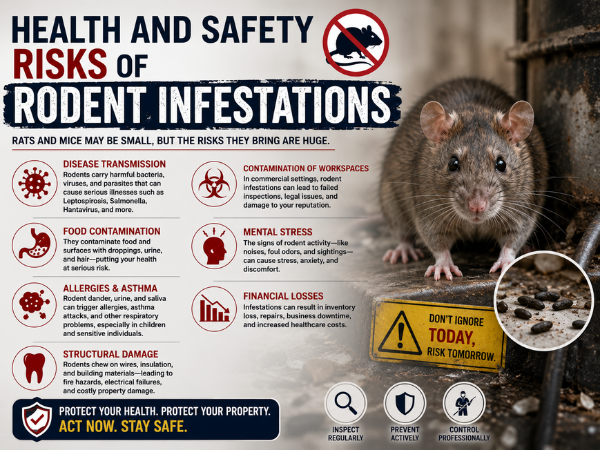
Rats are more than a nuisance. They’re a recognised carrier of bacteria and pathogens that can spread to humans through droppings, urine, saliva, or indirectly via fleas and mites living on their bodies. Diseases linked to rodents include leptospirosis and hantavirus, both of which can cause serious illness, and studies have found a meaningful proportion of Singapore’s rodent population carrying these pathogens.
Beyond disease risk, rats present real property and safety hazards. Their constant gnawing can damage electrical wiring, creating fire risks, as well as water pipes and structural materials, leading to leaks and costly repairs. For businesses, a rodent sighting also carries reputational and regulatory consequences, including potential NEA enforcement action and reputational damage from a customer complaint or online review.
Where Rats Hide in HDBs, Condos and Landed Homes
Rats favour dark, undisturbed, and food-adjacent spaces. Common hiding and nesting areas include:
- Behind and beneath kitchen appliances
- Inside wall voids, ceiling spaces, and roof cavities
- Storerooms, bomb shelters, and rarely used cupboards
- Near bin chutes, bin centres, and shared refuse points
- Underneath decking, sheds, or dense garden vegetation (for landed properties)
- Inside false ceilings and service ducts in condos and commercial buildings
A thorough inspection needs to cover these less obvious areas, not just the kitchen and pantry, since nesting sites are often well away from where the food evidence is found.
DIY vs Professional Rodent Control
Where DIY measures can help
For an isolated sighting or very early activity, a few steps can genuinely make a difference:
- Store food, including pet food, in sealed containers
- Seal visible gaps around pipes, vents, and doors with steel wool or sealant, rats can squeeze through surprisingly small openings
- Keep bin areas clean and take out rubbish regularly
- Use snap traps in a suspected activity area as an early response
Why DIY often falls short against an established infestation
Rat populations can grow quickly once established, and relying only on DIY methods can work against long-term control, since traps and store-bought baits address individual rats rather than the nest or the entry points allowing new ones in. Rats are also cautious around new objects in their environment, which can make DIY trapping less effective than it initially seems, especially against an experienced, established population.
If you’ve tried sealing gaps and setting traps and you’re still seeing droppings or hearing activity, it’s usually a sign that the nesting site and entry points haven’t been fully addressed. This is where our rodent control solutions, backed by residential pest control services built around inspection first, make the difference DIY traps alone can’t. For a full step-by-step walkthrough of trapping, sealing, and cleanup, see our complete guide to getting rid of rats in Singapore.
Book a professional inspection to map out where rats are entering and nesting, before the population grows further.
What Happens During Professional Rodent Treatment
At Pest Free Management, our rodent control approach follows a structured process rather than jumping straight to bait or traps:
- Inspection. We conduct an on-site check and infestation mapping to assess the extent of rodent activity across the property.
- Identification. Our technicians locate entry points, nesting sites, and travel routes, information that shapes the entire treatment plan.
- Control methods. Depending on the severity, we may use a combination of snap traps, glue traps, and tamper-proof bait stations with NEA-approved rodenticides, chosen to be safe around pets and children when placed correctly.
- Exclusion. We seal entry points using wire mesh, sealant, or steel wool, since gaps as small as roughly 1cm are enough for a rat to squeeze through.
- Monitoring and follow-up. Ongoing checks confirm activity has genuinely stopped, not just reduced, and catch any new entry points before they become a fresh problem.
Speak with our pest specialists for tailored advice on your property, whether it’s an HDB kitchen, a landed home garden, or a commercial storeroom.
Rodent Control for Businesses
Rodent activity carries added weight for F&B outlets, warehouses, offices, and healthcare facilities. Beyond the health risk, a rat infestation signs sighting in a commercial space can lead to failed hygiene inspections, NEA enforcement action, and lasting reputational damage from a customer complaint or social media post, something that’s especially costly for hospitality and F&B businesses. Warehouses and storage facilities face an added risk of stock and infrastructure damage, since rats can chew through packaging, wiring, and stored goods. Our commercial pest control services are built around exactly this kind of risk profile.
A proactive, scheduled rodent monitoring programme is generally more cost-effective for businesses than reactive treatment after activity is already visible to customers or staff. For properties dealing with a prolonged or severe infestation, a post-infestation decontamination service can also help address droppings, urine residue, and odours left behind once the rodent problem itself is resolved.
Preventing Rats From Coming Back
A few consistent habits meaningfully reduce the chances of a repeat infestation:
- Store food, including pet food, in sealed, rodent-proof containers
- Take out rubbish regularly and keep bin areas clean and covered
- Seal gaps around pipes, vents, and doors, checking especially where utility lines enter the building
- Trim vegetation and remove clutter near the building’s exterior, particularly for landed properties
- Fix leaking pipes or taps, since rats also need a consistent water source
- For condo and HDB residents, report ongoing rodent activity in shared areas to your management corporation or town council promptly
Quick Self-Check Checklist
Use this as a fast reference the next time you’re unsure whether you’re dealing with a stray rat or an established infestation:
- Droppings found near food storage or along skirting boards
- Gnaw marks on food packaging, wiring, or wooden fixtures
- Grease or smudge marks along frequently used walls
- Scratching or scurrying sounds at night, particularly in ceilings or walls
- A stale, ammonia-like odour in an enclosed space
- Nesting materials found in a hidden corner
- A rat seen during the day, not just at night
If you’ve ticked two or more boxes, it’s a reasonable time to book a professional inspection rather than rely on traps alone.
Key Takeaways
- A single rat sighting usually means more are nearby, but physical evidence, droppings, gnaw marks, grease trails, matters more than the sighting alone.
- Fresh droppings are dark and shiny; older ones dry out and turn greyish, which can help estimate how recent the activity is.
- Daytime sightings often indicate overcrowding or a disturbed nesting site, and are a stronger signal than a single nighttime sighting.
- Singapore’s climate, bin centre density, and high-rise living all contribute to rising rat activity, particularly during the rainy season.
- Rodents carry real health risks, including leptospirosis and hantavirus, alongside fire and water damage risk from gnawing.
- DIY traps and sealing can help with early-stage activity, but an established infestation usually needs professional identification of entry points and nesting sites.
- Businesses face added regulatory and reputational risk, making proactive monitoring more cost-effective than reactive treatment.
FAQs about Rat Infestation in Singapore
1. How do I know if I have rats or just one?
Look for physical evidence beyond the sighting itself: droppings, gnaw marks, grease trails, or nesting materials. A single sighting combined with any of these is a strong indicator of an established population rather than a one-off visitor.
2. What are the first signs of rats?
The earliest signs are usually droppings near food storage, gnaw marks on packaging or fixtures, scratching sounds at night, and a stale odour in enclosed spaces. These often appear before you ever see a rat directly.
3. Do rats come out during the day?
Rats are primarily nocturnal, so daytime activity is less common but not unheard of. It often signals overcrowding or a disturbed nesting site, and is generally worth treating as a stronger sign than an isolated nighttime sighting.
4. How fast do rat infestations grow?
Rats breed quickly, and populations can expand significantly within a matter of months if left unaddressed, which is part of why early intervention makes a meaningful difference in how manageable the problem is.
5. Can I get rid of rats without professional help?
For an isolated sighting or early activity, sealing entry points and using traps can help. For an established infestation, professional treatment is generally more effective, since it addresses nesting sites and entry points, not just individual rats.
Have a question that isn’t covered here? Check our full pest control FAQ for more answers on treatment, safety, and pricing.
Request a free consultation
schedule a rodent inspection today with Pest Free Management to find out exactly what’s behind the signs you’re seeing.
More Pest Control Resources
- Dengue Cluster Singapore: How to Check Your Area & Protect Your Home
- SFA Pest Control Requirements for F&B Outlets in Singapore: Complete Compliance Guide
- How to Check for Bed Bugs: A Room-by-Room Inspection Checklist
- Pest Control Cost in Singapore 2026: The Complete Pricing Guide by Pest Type

- Mosquito Control Singapore: NEA-Approved Methods That Actually Work
- Signs of a Rat Infestation in Your Home or Business (And What to Do)