Has recorded one of its worst dengue years in recent memory. By mid-2026, weekly case counts had climbed past 100 for the first time in years, with several red-alert clusters active in the northern part of the island. If you live, work, or manage a property in Singapore, knowing how to check whether you’re in an active dengue cluster — and what to do about it isn’t optional. It’s a weekly habit that can genuinely protect your household.
Dengue cluster singapore this guide explains what a dengue cluster actually is, how to check if your address is in one right now, what the different alert levels mean, how the Aedes aegypti mosquito actually spreads the virus, and the concrete steps you can take — at home and as a property manager — to reduce your risk.
Note: Dengue cluster locations change weekly. The figures below reflect the general 2026 situation as an illustrative example. Always check NEA’s live dengue cluster map for current, address-level data that map, not this article, is the authoritative source at any given moment.
Table of Contents
What Is a Dengue Cluster?
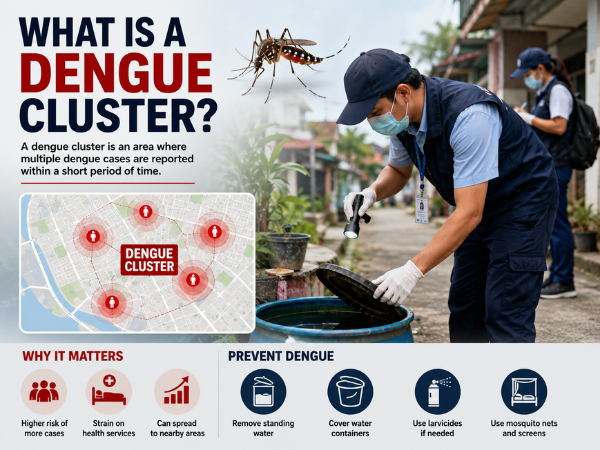
According to the National Environment Agency (NEA), a dengue cluster is formed when:
- Two or more dengue cases are reported within a 14-day period, and
- The homes of those cases are located within 150 metres of each other
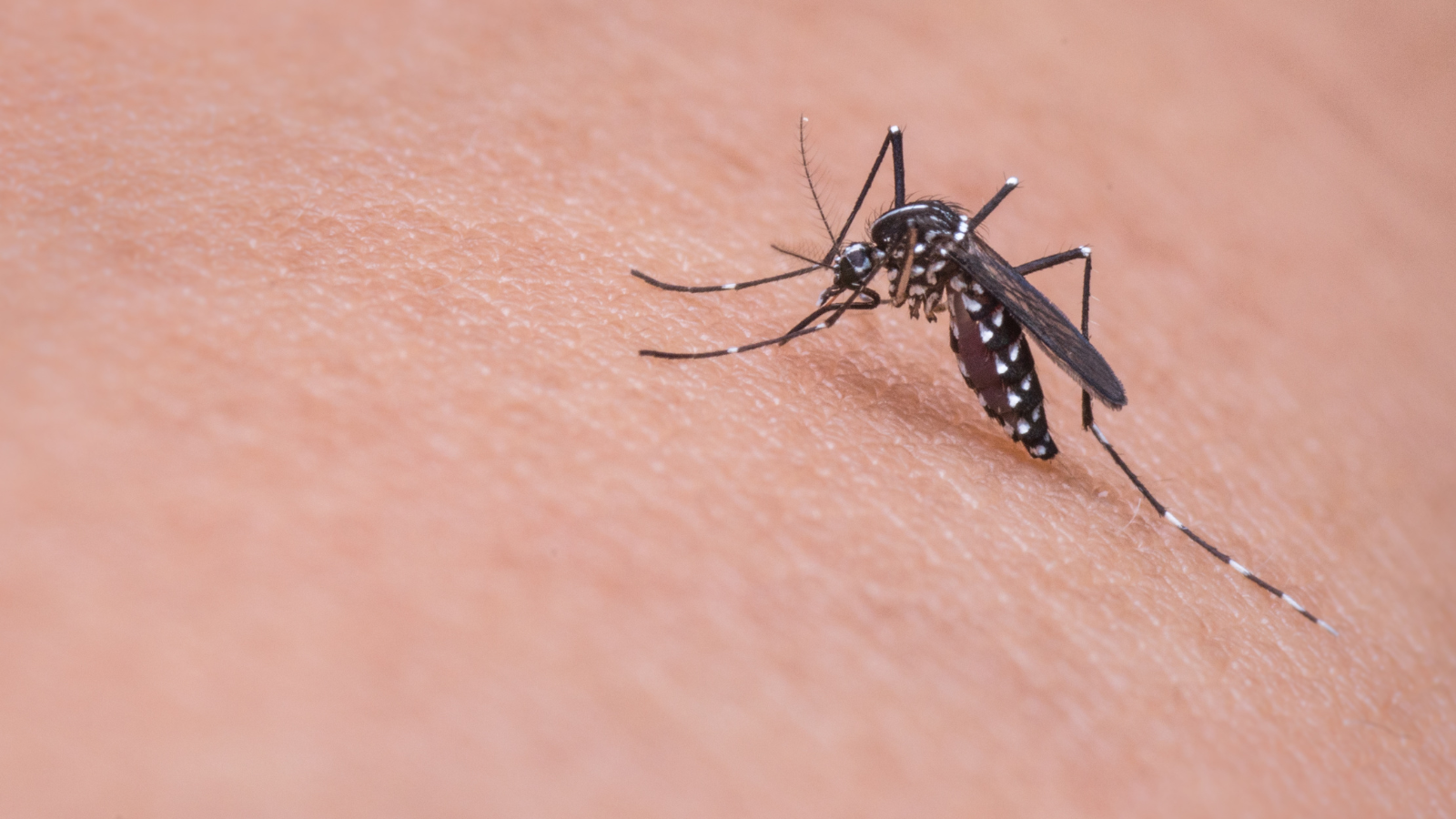
This 150m/14-day rule exists because it approximates the flight range and biting cycle of the Aedes aegypti mosquito — the primary dengue vector in Singapore. Aedes aegypti rarely flies more than 150m from where it hatched in its lifetime, so if two people who live close together fall ill within two weeks of each other, it strongly suggests a mosquito in that immediate area is actively transmitting the virus, rather than each case being an unrelated, isolated infection picked up elsewhere.
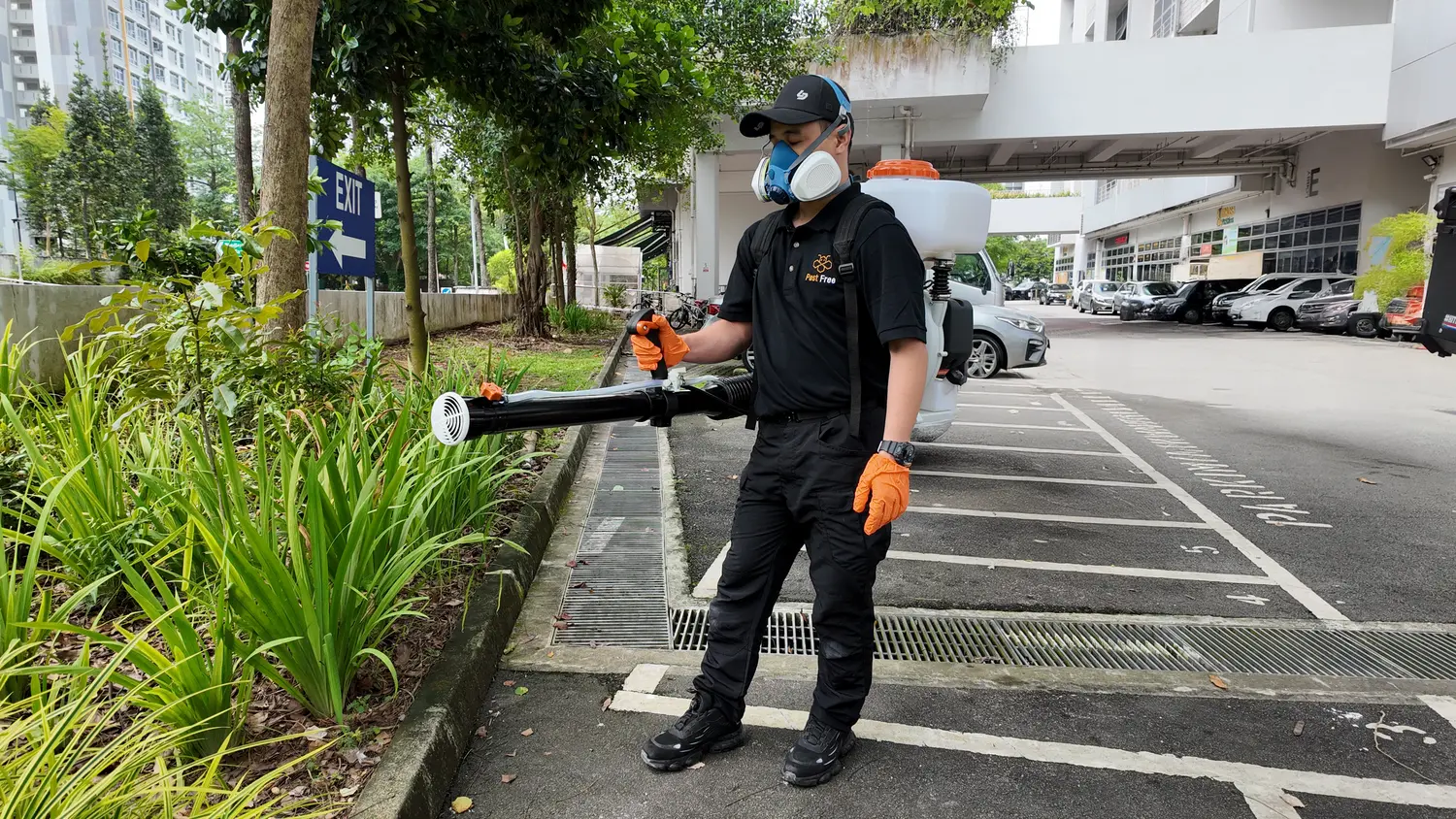
Once a cluster is identified, NEA doesn’t just monitor it passively. Officers are deployed to inspect homes and common areas, search for breeding habitats, and carry out vector control operations — misting, spraying, and larviciding — in the affected zone. This is why checking whether you’re inside a cluster matters: it’s not just a risk indicator, it’s also a signal that inspectors may visit your property and that you should expect (and cooperate with) heightened prevention activity in your neighbourhood.
Understanding Alert Levels: Green, Yellow, and Red
Not all dengue clusters carry the same risk. NEA classifies active clusters by severity, and the alert level tells you how urgently you should act:
| Alert Level | What It Means | What You Should Do |
| Green | Cluster is being monitored; case count is low and transmission has slowed | Remain vigilant, continue weekly Mozzie Wipeout |
| Yellow | Cluster is active with ongoing transmission | Step up home inspections, use repellent outdoors, check for breeding sites more frequently |
| Red | 10 or more cases recorded with fast, ongoing transmission | High-risk zone — inspect and clear breeding sites immediately, consider professional treatment |
As of mid-2026, Singapore has seen multiple red-alert clusters concentrated in areas such as Yio Chu Kang, Lentor, and surrounding estates in the north — a reminder that dengue risk is highly localised and can shift from month to month depending on breeding conditions, rainfall patterns, and where recent cases have clustered.
How Dengue Spreads: Meet the Aedes Aegypti Mosquito
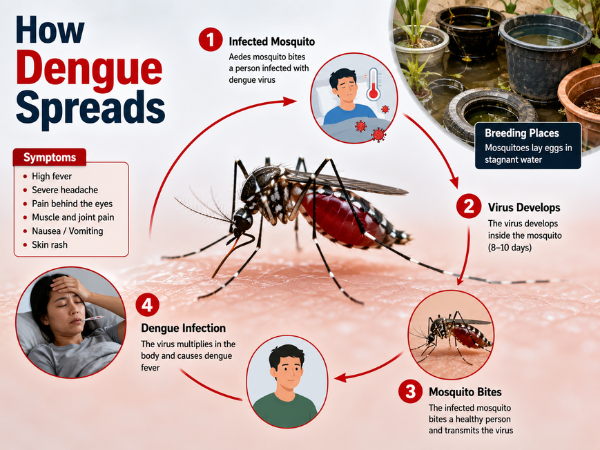
Understanding your enemy helps you prevent it more effectively. The Aedes aegypti mosquito — Singapore’s primary dengue vector — has a few distinct habits that separate it from the mosquitoes many people picture:
- It bites during the day, most actively in the two hours after sunrise and the hours before sunset — not at night like many other mosquito species.
- It prefers clean, stagnant water to breed, not dirty drains. A flowerpot saucer, an upturned bottle cap, or a vase of flowers is a far more likely breeding site than a muddy puddle.
- It can breed in water as small as a 20-cent coin in volume — which is why “I don’t have any big containers lying around” is not the same as “I have no breeding risk.”
- Its eggs can survive dry conditions for months, hatching within days once water returns — meaning a container that’s been dry for weeks can still produce mosquitoes after a single rainy afternoon.
- A female mosquito needs a blood meal to lay eggs, and typically feeds on humans in indoor and semi-outdoor spaces close to where she hatched — which is exactly why household prevention matters more than most people assume.
This combination — daytime biting, tiny breeding volumes, and dormant eggs — is why dengue control in Singapore focuses so heavily on source reduction (removing breeding sites) rather than only spraying adult mosquitoes. If you want a deeper breakdown of the actual treatment methods used against Aedes aegypti, our complete guide to NEA-approved mosquito control methods covers thermal fogging, ULV cold fogging, and larviciding in more detail than this article does.
Dengue Symptoms: When to See a Doctor
This article is a prevention and property-management guide, not a medical resource — if you suspect you or a family member has dengue, please see a doctor rather than rely on self-diagnosis from any website.
That said, common symptoms reported by MOH include sudden high fever, severe headache, pain behind the eyes, joint and muscle pain, nausea, and a skin rash that typically appears a few days into the illness. Warning signs that warrant urgent medical attention include persistent vomiting, abdominal pain, bleeding gums or nosebleeds, and unusual lethargy — these can indicate progression toward more severe dengue.
If you’ve recently been in or near an active dengue cluster and develop a sudden fever, it’s worth mentioning that exposure to your doctor, as it can help guide diagnosis and testing.
This is a sensitive health topic — if you or someone you know is currently unwell, please prioritise medical advice over anything read here.
Who’s at Higher Risk?
Dengue can affect anyone, but certain groups face a higher risk of severe illness:
- People with a history of prior dengue infection — reinfection with a different dengue virus strain carries a heightened risk of severe dengue hemorrhagic fever.
- Young children and older adults, whose immune responses and physical resilience to the illness differ from healthy adults.
- People with underlying conditions such as diabetes, heart disease, or other chronic illnesses, who face a higher risk of complications.
If your household includes anyone in these higher-risk groups, it’s worth treating dengue cluster checks and prevention as a higher priority rather than an occasional chore.

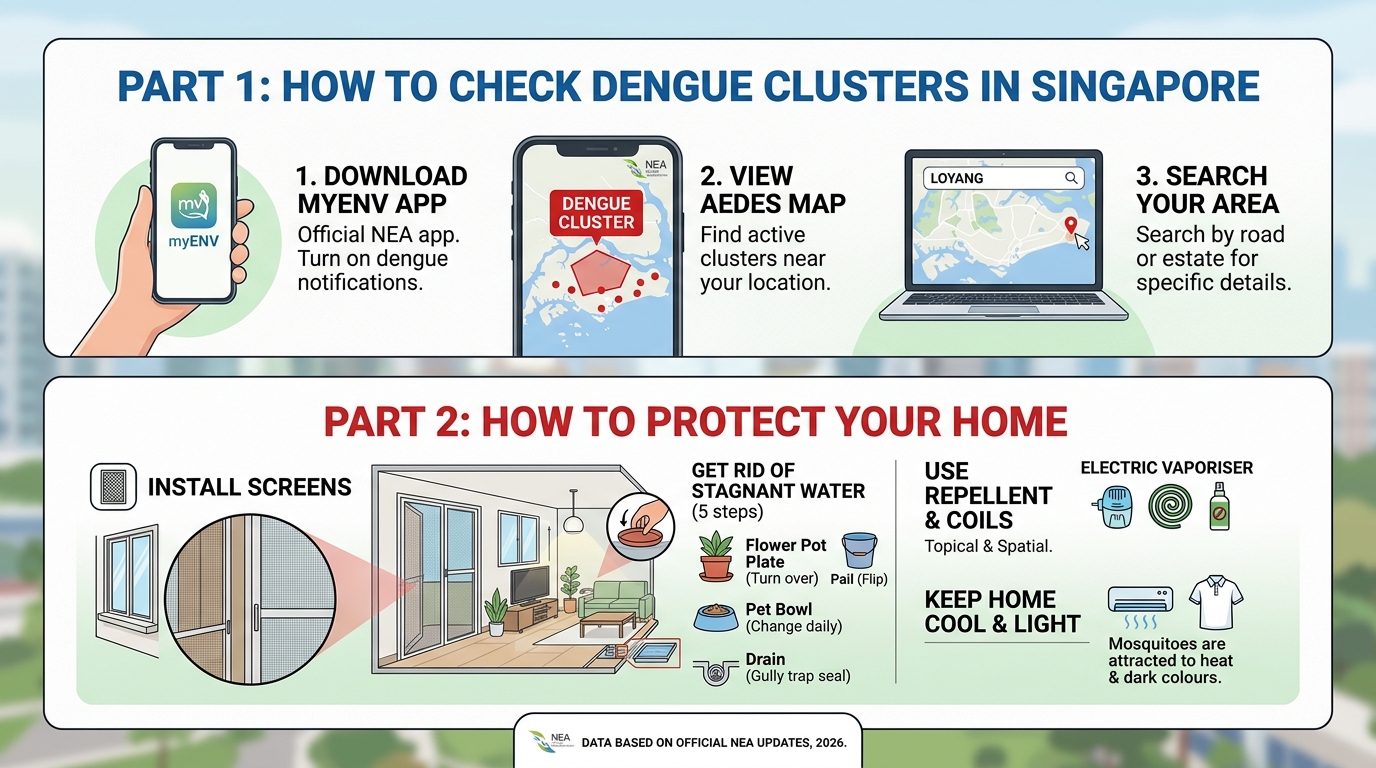
How to Check If You’re in a Dengue Cluster
You can check your own address in under a minute:
- Visit NEA’s official dengue cluster map — this is the authoritative, government-maintained source and is updated regularly.
- Search by street name or postal code to see whether your home, workplace, or a property you’re viewing or renting falls within a shaded cluster zone.
- Check the case count and alert colour for that cluster — this tells you how urgently to act (see the alert level table above).
- Check back weekly, not just once. Clusters open and close as case counts change, and an area that’s clear today can become active within days if breeding conditions are right.
If you’d rather not check manually every week, NEA also publishes cluster data as open geospatial data (via data.gov.sg), which several third-party tools use to build simpler, map-based checking interfaces — useful for a faster visual reference, though NEA’s own site remains the definitive source for decisions that matter.
What Happens Once Your Area Becomes a Cluster
If your neighbourhood is declared a dengue cluster, you can expect:
- Advisory letters notifying residents within the affected radius.
- NEA officer inspections of homes and common areas for mosquito breeding habitats — cooperating with these inspections is important, and in persistent cases of neglected breeding sites, it can become an enforcement matter with fines.
- Vector control operations, including indoor and outdoor misting, oiling of stagnant water bodies, and larviciding of drains and common areas.
- Grassroots outreach — volunteers and advisers going door-to-door with prevention reminders and information on common local breeding habitats.
None of these measures work in isolation. NEA has been explicit that community cooperation — residents actually acting inside their own homes — is what determines whether a cluster is brought under control quickly or continues to grow, which is exactly where the next section comes in.
The 5-Step Mozzie Wipeout
NEA’s core prevention message is the 5-step Mozzie Wipeout, and it should be treated as a weekly habit, not a once-off spring clean. As covered above, Aedes aegypti can breed in stagnant water as small as a 20-cent coin, and eggs can survive dry conditions for months, hatching as soon as water returns.
- Check — Inspect your entire home and yard for standing water: flowerpot plates, gutters, air-con trays, pails, vases, and any container that can hold even a small amount of rainwater.
- Remove — Empty out any water you find. Pour it down the drain, into soil, or somewhere it won’t pool again.
- Clean — Scrub the inside walls of containers, not just tip them out. Mosquito eggs stick to surfaces and can survive water removal alone.
- Drain — For plants with leaf axils that trap water (such as bromeliads), consider adding a small drainage hole so water can’t pool at the base of leaves.
- Discard — Get rid of items you don’t need that could collect water — old pails, unused flowerpots, discarded tyres, and similar containers.
Doing this weekly, in tandem with your neighbours, is what actually breaks the mosquito breeding cycle. A single unchecked property — even one you don’t own, like a neighbour’s balcony — can undo an entire block’s collective effort.
Common Breeding Spots Homeowners Miss
The obvious containers get checked. It’s the less obvious ones that keep breeding sites alive despite a household’s best intentions:
- Gully traps and floor drains with dried-up water seals, which can hold small amounts of trapped water and are frequently overlooked
- Air-conditioner condensation trays and drip pans, especially on units that aren’t regularly serviced
- Roof gutters and ledges, particularly after heavy rain, which are difficult to inspect without going up
- Canvas or tarpaulin covers (over furniture, motorcycles, or renovation materials) that sag and pool water
- Bamboo pole holders on HDB corridors, a classic and frequently cited Singapore-specific breeding site
- Water features and fish ponds that aren’t properly stocked with larvivorous fish or aerated
- Construction and renovation sites, where uncovered containers, tarps, and equipment can collect water for weeks
- Sink and floor traps in unused bathrooms or utility rooms, especially in properties with a spare toilet that’s rarely flushed
If your household has been diligent with the visible containers but mosquitoes are still present, one of these less obvious spots — or a similar spot on a neighbouring or common property — is often the culprit.
The Wolbachia Project: Singapore’s Long-Term Strategy
Beyond household-level prevention, NEA has been running a large-scale Project Wolbachia, which releases male Aedes aegypti mosquitoes carrying the Wolbachia bacterium into the environment. When these males mate with wild female mosquitoes, the resulting eggs don’t hatch — gradually suppressing the local Aedes aegypti population over time in the release areas.
This is a long-term, population-level suppression strategy rather than an immediate fix, and NEA has been clear that it complements — rather than replaces — the need for ongoing household-level source reduction. In other words: Wolbachia release areas still need residents doing the Mozzie Wipeout every week.
When Home Prevention Isn’t Enough: Professional Mosquito Control
The 5-step Mozzie Wipeout addresses breeding sites you can see and reach. But mosquitoes also breed in places most residents never check or can’t access — blocked internal drains, roof gutters, construction site puddles, void decks, and common areas shared with neighbours. In an active cluster, or for larger properties (landed homes, condominiums, commercial premises), this is usually where professional treatment adds real value.
| Method | What It Targets | Best Suited For |
| Larviciding | Mosquito larvae in standing water, before they mature into biting adults | Drains, gully traps, ponds, common-area water features — generally more effective long-term than adult-only treatments |
| Thermal fogging | Active adult mosquito populations in a treated area | Rapid knockdown before events, or as an urgent response when a cluster forms nearby |
| ULV (cold) fogging | Adult mosquitoes, with finer droplets for better penetration into vegetation and crevices | Outdoor common areas, gardens, landscaped estates |
| Ongoing monitoring contracts | Recurring inspection and treatment on a schedule | Condo management corporations and commercial properties responsible for common-area breeding checks under NEA guidelines |
If you’re dealing with a persistent mosquito problem, our mosquito control service covers NEA-aligned treatment methods for both residential and commercial properties, backed by residential pest control services for homeowners specifically — you can also read more about our approach on our pest control services page.
Worried you’re in an active dengue cluster or dealing with a mosquito problem you can’t shift on your own? Pest Free Singapore offers professional mosquito inspection and treatment for homes and businesses. Book a free inspection.
Dengue Prevention Checklist for Landlords & Property Managers
Property managers and management corporations carry a particular responsibility here: common areas — corridors, void decks, drains, landscaped gardens, and shared facilities — are exactly the kind of space individual residents can’t inspect or clear themselves, and NEA holds building management accountable for breeding found in these areas.
A practical monthly checklist for landed estates, condos, and commercial buildings:
- [ ] Confirm gully traps and floor drains in common areas are dry or properly sealed
- [ ] Inspect landscaped areas, ponds, and water features for stagnant water and mosquito larvae
- [ ] Check rooftop and gutter drainage after heavy rain
- [ ] Review bin centres and refuse areas for discarded containers capable of holding water
- [ ] Confirm any ongoing pest/mosquito control contract covers larviciding of common-area drains, not just fogging
- [ ] Keep records of inspections and treatments — useful both for NEA compliance and for demonstrating due diligence to residents or tenants
Properties managing multiple units or a larger commercial footprint may find it more practical to work with a licensed provider on a recurring contract rather than relying on ad hoc callouts — our commercial and industrial pest control page covers what that typically involves.
Frequently Asked Questions About Dengue Clusters in Singapore
1. How do I check if I’m in a dengue cluster?
Visit NEA’s official dengue cluster map and search your street name or postal code. Check back weekly, as clusters change frequently based on new case reports.
2. What happens when NEA declares a dengue cluster?
NEA sends advisory letters to residents in the area, conducts home and common-area inspections, and carries out vector control operations such as misting and larviciding. Grassroots volunteers may also go door-to-door with prevention reminders.
3. What’s the difference between a Green, Yellow, and Red alert cluster?
green means a cluster is being monitored with low ongoing transmission; Yellow means active, ongoing transmission; Red means 10 or more cases with fast, ongoing transmission — the highest-risk category requiring immediate action.
4. Does having no cluster in my area mean I’m safe from dengue?
not necessarily. Clusters can form quickly once cases are reported, and mosquitoes don’t respect cluster boundaries. Weekly prevention habits matter regardless of whether your address currently sits inside a shaded cluster zone.
5. How long does a dengue cluster typically stay active?
varies significantly depending on how quickly breeding sites are cleared and transmission is interrupted some clusters resolve within a few weeks, while persistent breeding conditions can keep a cluster active for months. Checking NEA’s map regularly is the only reliable way to know a cluster’s current status.
Frequently Asked Questions About Mosquito Prevention & Treatment
1. How can I protect my home during a dengue outbreak?
Practise the 5-step Mozzie Wipeout weekly (check, remove, clean, drain, discard), use insect repellent — especially at dawn and dusk when Aedes aegypti is most active — and cooperate with any NEA inspections in your area.
2. Is fogging enough to control mosquitoes, or do I need larviciding too?
Fogging kills adult mosquitoes present at the time of treatment but doesn’t address eggs or larvae already in the water. For lasting control, larviciding of standing water sources is generally paired with fogging rather than used alone. Our mosquito control methods guide walks through exactly how these methods are meant to work together.
3.How often should mosquito treatment be done in an active cluster?
This depends on the property and the severity of the cluster, but properties in red-alert zones typically benefit from more frequent inspection and treatment than the baseline monthly or quarterly schedule used in unaffected areas.
4. Are mosquito traps or zappers effective against dengue mosquitoes?
They can reduce localised adult populations but don’t address breeding sites, which is where the mosquito population is actually generated. They’re best used as a supplement to source reduction, not a replacement for it.
5. Who is responsible for mosquito control in common areas of a condo or HDB estate?
Management corporations (for condos) and town councils (for HDB estates) are generally responsible for common-area breeding checks and treatment, while individual residents are responsible for their own units. NEA can act against either party found harbouring breeding sites.
6. How much does professional mosquito control cost?
It depends on property size, whether you need a one-off fogging visit or an ongoing larviciding and monitoring programme, and how urgent the situation is (e.g. inside an active red-alert cluster). Our pest control pricing guide breaks down the factors that affect cost across pest types, including mosquitoes.