
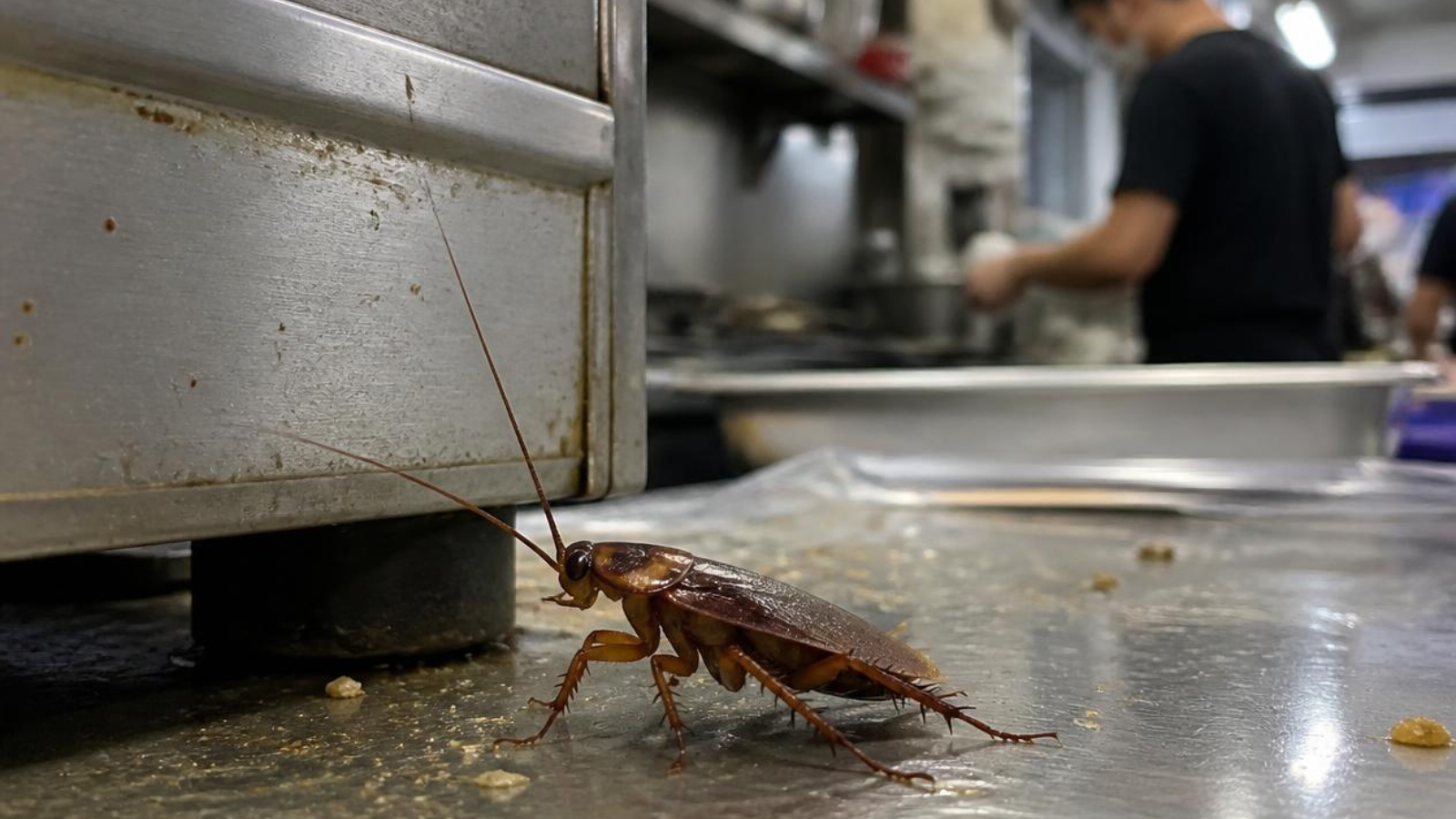
German cockroach a single German cockroach sighting during service can undo months of goodwill with customers. It can also trigger a failed hygiene inspection, a social media post you can’t take back, and, in serious cases, action from the Singapore Food Agency (SFA).
German cockroach For restaurant, cafe, and central kitchen operators, German cockroaches aren’t just a nuisance pest. They’re the species most consistently linked to food establishment infestations in Singapore, and understanding why they target commercial kitchens specifically, and what SFA-compliant pest control actually looks like, is essential groundwork before your next audit.
This guide covers why German cockroaches thrive in F&B environments, the business risks involved, what’s expected of you under Singapore’s pest control requirements, and how a proper treatment programme is structured.
Table of Contents
Why German Cockroaches Are the #1 Kitchen Pest in Singapore
Of the cockroach species found in Singapore, the German cockroach is the one most strongly associated with commercial kitchens and food establishments specifically. Unlike the larger American cockroach, which tends to favour drains and refuse areas, German cockroaches are drawn directly to food, warmth, and moisture, exactly what a working kitchen provides in abundance. Our cockroach control services are built around this exact distinction, since treatment approaches differ meaningfully by species.
They’re also prolific breeders. A single female can produce an egg case carrying dozens of eggs, and under kitchen conditions, warm, humid, with a constant food supply, populations can establish and grow faster than in a typical residential setting. This is part of why F&B outlets need a fundamentally different pest control approach than a home kitchen: the risk profile and the urgency are both higher.

How to Identify a German Cockroach
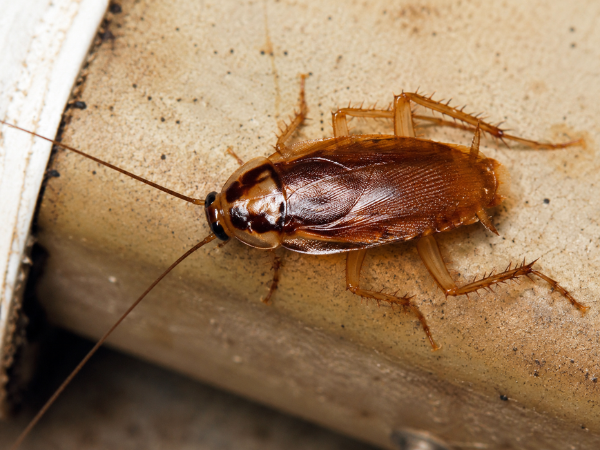
Knowing what you’re dealing with matters, because treatment approaches differ by species. German cockroaches are:
- Small, roughly 1.3 to 1.6cm long
- Light brown to tan, with two dark parallel stripes running behind the head
- Fast-moving, but unable to fly
- Typically found in and around food prep areas, behind equipment, inside cracks near ovens and fryers, and in warm, tight spaces close to a food or water source
Book a professional inspection to identify exactly where German cockroaches are nesting in your kitchen, before your next SFA audit.
If your team is finding droppings resembling coffee grounds near prep stations, egg cases tucked behind equipment, or a persistent musty odour in the kitchen even after cleaning, those are consistent with an active German cockroach population rather than an isolated stray.
Why F&B Outlets Are Especially Vulnerable
Several conditions specific to commercial food environments make F&B outlets more attractive to German cockroaches than most other property types:
- Constant food access. Prep surfaces, storage areas, and even equipment crevices accumulate food residue that’s difficult to eliminate entirely through routine cleaning alone.
- Grease build-up. Grease traps, extraction hoods, and the areas around fryers and grills are prime cockroach habitat, warm, sheltered, and rarely disturbed during a standard clean.
- Constant warmth and moisture. Commercial kitchen equipment generates heat and condensation, conditions German cockroaches thrive in.
- High delivery turnover. Cardboard boxes, produce crates, and supplier deliveries are a common, often overlooked, entry route for cockroaches and their egg cases.
- Shared premises risk. In food courts, coworking kitchens, and multi-tenant commercial buildings, an infestation in one unit can spread to neighbouring outlets through shared walls, ceiling voids, and plumbing.
None of this reflects poorly on hygiene standards on its own. Even well-run kitchens are vulnerable simply because of what a commercial kitchen environment naturally provides.
The Business Risks of an Infestation
A cockroach sighting in an F&B setting carries consequences well beyond the pest itself:
| Risk Area | Potential Consequence |
| Regulatory | Failed SFA hygiene inspection, warning letters, fines, or in serious repeat cases, licence suspension |
| Reputational | Customer complaints, negative reviews, viral social media posts |
| Financial | Lost revenue from closure periods, remediation costs, potential stock disposal |
| Health & safety | Food contamination risk from bacteria such as Salmonella and E. coli carried by cockroaches |
| Staff morale | An unsanitary environment affects staff wellbeing and can increase turnover |
The reputational risk in particular tends to outlast the pest problem itself. A single customer photo or review mentioning a cockroach sighting can circulate long after the infestation has been resolved, which is exactly why a proactive, documented pest control programme, not a reactive one, is the standard F&B operators are expected to meet.
SFA Pest Control Requirements for F&B Outlets
Singapore’s food establishments operate under strict hygiene and licensing conditions set by the Singapore Food Agency, which include expectations around pest management as part of maintaining a valid food shop or food stall licence. In practice, this generally means:
- Maintaining ongoing, documented pest control rather than calling for help only after a sighting
- Keeping a pest control logbook or service record that can be produced during an SFA audit
- Engaging a licensed pest management company for regular inspections and treatment
- Addressing structural gaps, drainage issues, and waste management practices that contribute to pest risk
- Training staff to recognise and report early signs of pest activity
Non-compliance with hygiene and pest management expectations can result in enforcement action, ranging from warning notices through to fines or, for serious and repeated breaches, licence suspension. If you’re unsure whether your current pest control arrangement meets audit expectations, our complete SFA compliance guide for F&B outlets covers exactly what’s expected, from licensing documentation through to hygiene grading and the Points Demerit System.
How Often Should Restaurants Do Pest Control?
There’s no single frequency that applies to every F&B outlet, since it depends on the type of establishment, kitchen size, and risk factors like delivery volume and waste handling. That said, most commercial kititchens benefit from:
- Monthly or more frequent routine treatments for higher-risk outlets (busy restaurants, food courts, central kitchens)
- Quarterly monitoring visits as a minimum for lower-risk premises, alongside monthly or bi-monthly treatment depending on findings
- Immediate follow-up treatment whenever a sighting or audit flags an issue, rather than waiting for the next scheduled visit
The right frequency is something a pest control provider should recommend after inspecting your specific premises, not a one-size-fits-all number. A busy hawker stall with high food turnover has a very different risk profile from a quiet café with limited food prep.
Request a free consultation with Pest Free Management to review your F&B outlet’s pest control programme and get it audit-ready ahead of your next SFA inspection.
Common Hiding Spots in Commercial Kitchens
Because German cockroaches favour warm, tight, food-adjacent spaces, certain areas of a commercial kitchen consistently need extra attention during inspection:
- Behind and underneath cooking equipment (ovens, fryers, grills)
- Inside grease traps and around extraction hoods
- Beneath and behind refrigeration units, where condensation collects
- Inside cracks around wall-mounted equipment and conduits
- Storage shelving and dry goods areas, particularly cardboard packaging
- Drainage points and floor traps
- Behind wall panelling near plumbing runs
A thorough inspection needs to cover all of these, not just the visible prep and dining areas, since this is where an infestation typically establishes long before it becomes visible to customers.
What SFA-Compliant Treatment Looks Like
A proper commercial cockroach treatment programme goes well beyond a single spray visit. At Pest Free Management, our approach for F&B premises is built around:
- Full-site inspection. We check kitchens, storage areas, waste zones, and equipment for entry points, nesting sites, and existing activity, not just the areas flagged by staff.
- Species-specific treatment. German cockroaches respond best to a combination of gel baiting, insect growth regulators (IGRs) that disrupt the breeding cycle, and targeted residual treatment in identified hotspots.
- Low-disruption scheduling. Treatments are typically scheduled after hours or during off-peak periods to avoid disrupting service.
- Documentation. Every visit is logged, giving you an audit-ready service record for SFA inspections, rather than scrambling to prove compliance after the fact.
- Follow-up monitoring. Because cockroach eggs can survive an initial treatment, follow-up visits confirm the infestation is genuinely under control, not just temporarily reduced.
Every kitchen is different, and the right combination of treatment methods depends on what the inspection actually finds, not a standard package applied regardless of the premises.
Book a professional inspection to identify exactly where German cockroaches are nesting in your kitchen, before your next SFA audit.
Staff Training and Documentation
Pest control isn’t only what happens during a technician’s visit. Between visits, your own team is often the first line of defence. A few practices worth building into daily operations:
- Train kitchen staff to recognise early warning signs, droppings, egg cases, musty odours, and to report them immediately rather than waiting
- Keep a simple, consistent pest sighting log that staff can update, useful both for tracking patterns and for SFA documentation
- Maintain a copy of your pest control service records and treatment reports on-site, ready to produce during an inspection
- Reinforce basic hygiene habits, closing food storage containers, managing waste promptly, wiping down grease-prone surfaces, since these reduce the conditions cockroaches need to establish in the first place
None of this replaces professional treatment, but it does close the gap between scheduled visits, when most infestations actually take hold.
Speak with our pest specialists about setting up a documented, audit-ready pest control programme tailored to your outlet’s risk profile.
An Illustrative Scenario
The following is an illustrative example only, not a real customer case.
A café operator notices occasional cockroaches near the dishwashing station, mostly late at night after closing. Cleaning routines seem thorough, so the sightings are initially dismissed as a one-off. During a routine inspection ahead of licence renewal, a pest technician identifies an active German cockroach population nesting behind the dishwasher and inside a nearby wall cavity, drawn by residual food debris and consistent warmth from the equipment. A targeted gel baiting and IGR programme, combined with sealing the wall cavity access point, resolves the visible activity within a few treatment cycles, and a documented service log gives the operator confidence ahead of their next SFA inspection.
Choosing a Pest Control Partner for F&B Compliance
Not every pest control provider is set up to handle the specific demands of an F&B environment. When evaluating a provider for your outlet, it’s worth checking:
- NEA licensing and relevant certifications, confirming the company operates within Singapore’s regulatory framework
- Experience with food establishments specifically, commercial kitchens have different risk factors than residential or general office premises
- Documentation practices, whether service reports are detailed and audit-ready, not just a sign-off slip
- Flexible scheduling, treatments that work around your service hours rather than disrupting them
- Transparent pricing, understanding what’s included in a contract versus billed separately for follow-up visits
A provider that treats inspection and documentation as seriously as the treatment itself tends to be a better long-term fit for F&B compliance than one focused purely on eliminating a single sighting. If you’re also evaluating what a fair contract should cost, our guide on how commercial pest control contract pricing works breaks down what drives the number up or down.
Key Takeaways
- German cockroaches are the species most consistently linked to Singapore F&B infestations, drawn specifically to the food, warmth, and moisture commercial kitchens provide.
- Even well-run kitchens are vulnerable, since the risk comes from the environment itself, not necessarily from poor hygiene practices.
- A cockroach sighting carries regulatory, reputational, and financial risk that typically outlasts the pest problem.
- SFA expectations generally include ongoing documented pest control, not reactive treatment after a sighting.
- Treatment frequency should be based on your outlet’s specific risk profile, not a generic schedule.
- Grease traps, equipment crevices, and delivery packaging are among the most commonly overlooked hiding spots.
- Staff training and consistent documentation close the gap between professional treatment visits.
Frequently Asked Questions
1. Why do F&B outlets get German cockroaches?
F&B outlets provide exactly what German cockroaches need to thrive: constant food access, warmth from kitchen equipment, and moisture from cooking and cleaning activity. These conditions exist even in well-maintained kitchens, which is why F&B premises are at higher risk than most other property types.
2. How often should restaurants do pest control?
It varies by outlet type and risk level, but many commercial kitchens benefit from monthly or more frequent treatment, with quarterly monitoring as a minimum for lower-risk premises. A pest control provider should assess your specific kitchen to recommend an appropriate schedule rather than applying a blanket frequency.
3. What are SFA pest control requirements?
SFA licensing conditions generally expect food establishments to maintain ongoing, documented pest control, keep service records available for audit, and engage a licensed pest management company rather than relying on reactive treatment. Specific requirements can vary, so it’s worth confirming current conditions directly with SFA or your pest control provider.
4. Can one cockroach sighting fail an SFA inspection?
A single sighting during an inspection can certainly raise concerns and prompt closer scrutiny, though outcomes generally depend on the broader context, including your documented pest control history and overall hygiene standards. A consistent, audit-ready pest control programme is the best way to reduce this risk.
5. How do I know if what I’m seeing is a German cockroach or another species?
Size and colour are the quickest indicators, German cockroaches are small (1.3–1.6cm) and light brown with two dark stripes behind the head, while American cockroaches are larger and reddish-brown. If you’re seeing broader signs like droppings, egg cases, or an unexplained odour and want a fuller identification and warning-sign checklist beyond the kitchen context, our guide on 9 warning signs of a cockroach infestation covers this in more detail.
6. Can my hygiene grade drop even if my kitchen looks clean?
Yes. Pest activity can occur even in well-maintained kitchens, since German cockroaches are drawn to structural conditions (warmth, moisture, grease build-up in hard-to-reach spots) rather than visible dirtiness alone. A clean-looking kitchen isn’t a guarantee against pest findings during an inspection, which is part of why proactive, documented pest control matters more than surface-level cleaning alone.
7. What other pests should F&B outlets watch for besides cockroaches?
Rodents and flies are the other two pests most commonly flagged during SFA inspections, both carry similar contamination risks. For F&B businesses with dine-in seating, lounge areas, or an attached hospitality component, bed bugs are also worth monitoring, our guide on identifying and treating bed bug bites explains what early signs to look for if guests or staff raise concerns.
Have a specific outlet or compliance concern? Get in touch with our team directly.
Latest Resources
- Dengue Cluster Singapore: How to Check Your Area & Protect Your Home
- SFA Pest Control Requirements for F&B Outlets in Singapore: Complete Compliance Guide
- How to Check for Bed Bugs: A Room-by-Room Inspection Checklist
- Pest Control Cost in Singapore 2026: The Complete Pricing Guide by Pest Type
- Mosquito Control Singapore: NEA-Approved Methods That Actually Work